WaterColor works because outdoor space is part of daily life, not just a nice extra. Across 499 acres, the community blends parks, trails, lawns, pools, and lake access into one easy-to-use layout. If I were sizing it up as a visitor or buyer, I’d focus on three things: how easy it is to get around without driving, where people spend most of their time, and what the extra costs and access rules look like.
Here’s the short version:
- Cerulean Park is the main open lawn for events, walks, and casual time outside.
- Marina Garden and the town center green space connect shops, dining, and the Boathouse on Western Lake.
- Walking and biking trails link homes to pools, the town center, and lake access.
- Lawns, gardens, and preserved green space give the neighborhood quieter spots and help it feel less crowded.
- Shared recreation areas include Camp WaterColor, the Beach Club, the Boathouse, and tennis/pickleball courts.
- Residents and guests also have access to about 10 pools.
- A $330 quarterly assessment helps fund Beach Club and Camp WaterColor work through 2030.
- Some recreation areas use wristband access, which matters for guests.
What stands out to me is simple: WaterColor’s outdoor setup shapes how people move, relax, and spend time with family. It feels built for walking, biking, pool time, and lake time first - with cars in the background.
| Space | Main Use | Best For | Access Note |
|---|---|---|---|
| Cerulean Park | Events and open lawn use | Families, walks, downtime | Open community space |
| Marina Garden / Town Center | Social activity near shops and lake | Visitors, families, central access | Easy walk-up area |
| Trails | Getting around on foot or bike | Daily exercise, short trips | Community-wide use |
| Lawns / Green Space | Quiet outdoor time | Relaxing, casual gathering | Open common areas |
| Camp WaterColor / Beach Club / Boathouse | Pools, beach, paddling, sports | Families and active users | Wristband rules may apply |
So if you want the plain answer, here it is: WaterColor’s parks, trails, and lawns matter because they make the whole community easier and more pleasant to use every day.
WaterColor Community Tour | 30A Florida
sbb-itb-d06eda6
How Outdoor Space Shapes Life in WaterColor
WaterColor spreads parks, trails, lawns, and recreation areas across its 499 acres, so outdoor space becomes part of everyday life, not something people save for the weekend. In plain terms, green space stays close to home, and that makes it easy to use day after day.
Families can use about 10 pools, plus tennis and pickleball courts, and events at Camp WaterColor. Trails link the neighborhoods, which makes walks, bike rides, and short trips feel natural. Around Western Lake and the preserved green space, the pace shifts. Those spots offer a quieter setting for people who want a little more calm. Funding already in place will expand the Beach Club and Camp WaterColor through 2030.
Cerulean Park shows this planning most clearly.
1. Cerulean Park
Primary use
Cerulean Park is WaterColor's main gathering space for community events and laid-back time outdoors.
Atmosphere
The park fits WaterColor's walkable, resort-style setting. The lawns are well kept, the edges are clean, and the whole space feels polished and inviting.
Best for
Cerulean Park is a good fit for families, visitors who want easy access to outdoor space, and buyers thinking about long-term livability.
Community value
Cerulean Park adds to WaterColor's pull as a neighborhood shaped around shared green space. From this spot, that green space extends into the town center and the trail network.
2. Marina Garden and Town Center Green Space
Primary use
After Cerulean Park, WaterColor’s social life moves into the town center. That’s where Marina Garden becomes the busiest shared space in the neighborhood.
The Marina Garden and Town Center green spaces sit at the heart of WaterColor’s social scene, connecting homes with shops, dining, and the Boathouse on Western Lake. They also make room for community events. That’s a big part of why this area feels polished and resort-like in day-to-day life.
Atmosphere
The setting feels polished, calm, and easy to walk. HOA-funded landscaping keeps the area neat throughout the year.
Best for
This area works well for families, visitors, and future residents who want an active, walkable spot close to WaterColor’s town center.
Community value
These green spaces help keep WaterColor’s resort feel in place while giving the town center steady daily activity.
3. Walking and Biking Trails
From the town center, the trail system carries that easy, walkable feel through the rest of the neighborhood.
Primary use
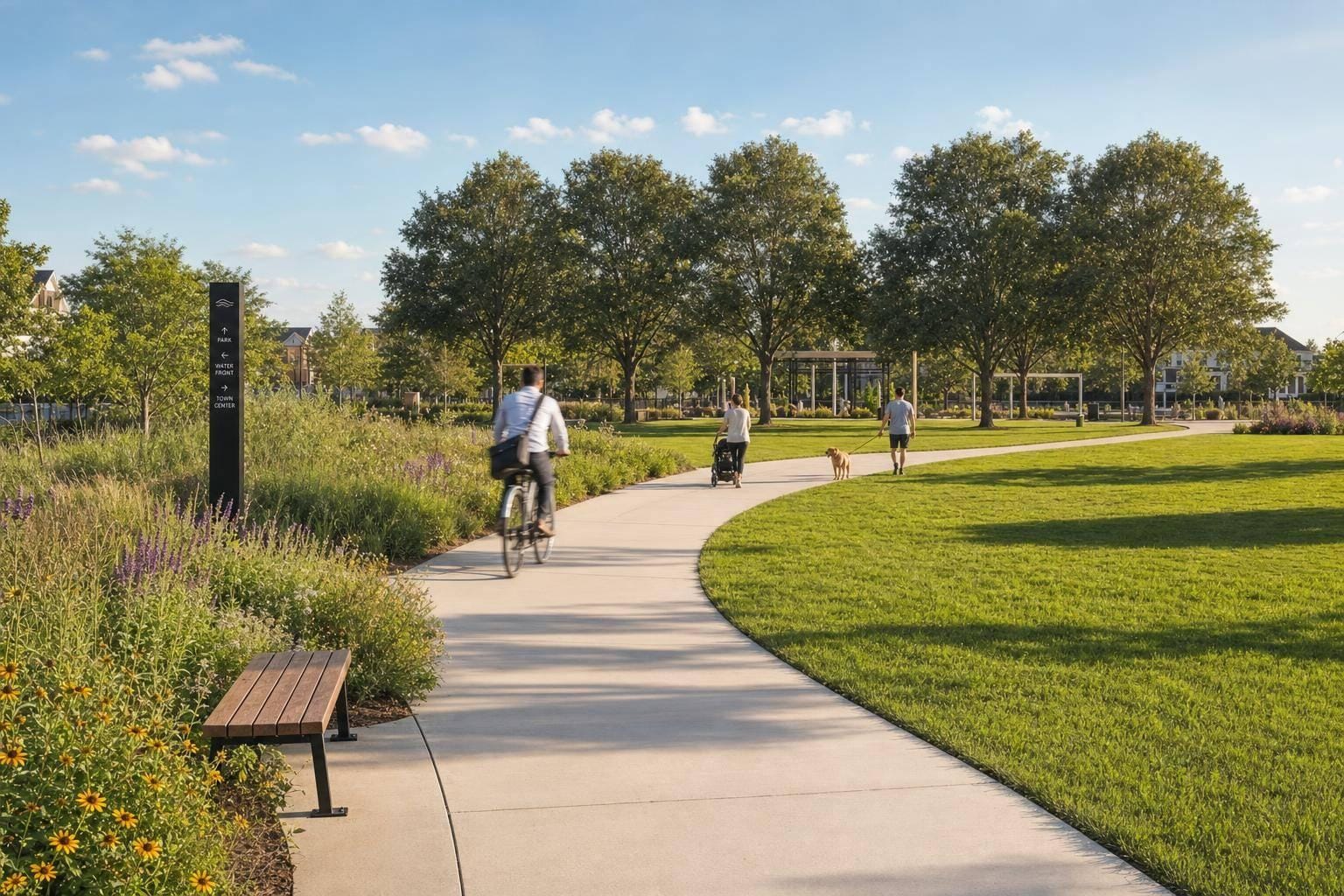
WaterColor's trail network is the backbone of the community. The paths connect homes to the Boathouse on Western Lake, the Town Center, and the neighborhood pools. Instead of driving from one amenity to another, most residents and guests simply walk or bike.
Atmosphere
The trails feel natural and unhurried. Since they’re built into the neighborhood layout, getting around WaterColor on foot or by bike feels simple and low-stress.
Best for
The trail system is a good fit for families, cyclists, and runners who want an easy route for everyday use. These paths are also ideal for exploring free community events and hikes throughout the South Walton area.
Community value
The trails help WaterColor feel car-light, connected, and simple to use day to day.
From these paths, WaterColor opens into quieter lawns, gardens, and preserved green space.
4. Lawns, Gardens, and Preserved Green Space
Beyond the paths, WaterColor's lawns and preserved natural areas create slower, quieter places to gather, linger, and spend time outside.
Primary use
The lawns and gardens host community events, casual play, and everyday gathering space. They’re the kind of spots that work for both planned activities and simple day-to-day use. The preserved natural areas also act as buffers, helping the neighborhood feel open and easy to move through.
Atmosphere
Careful landscaping and preserved natural areas give the community a polished look without making it feel stiff. The result is relaxed, inviting outdoor space that fits the pace of WaterColor.
Community value
These spaces support WaterColor's walkability, curb appeal, and long-term appeal for visitors and future residents. Just as important, they tie the neighborhood's parks, trails, and recreation areas together into one connected outdoor experience.
5. Shared Outdoor Recreation Areas
WaterColor isn't just about quiet lawns and trails. Its shared recreation spots add a more social, active side to day-to-day life. These are the places where the neighborhood's green setting turns into something you actually use, whether that's pool time with the kids or an afternoon on the lake. A $330 quarterly assessment funds the Camp WaterColor and Beach Club expansions through 2030.
Primary use
The main hubs are Camp WaterColor, the WaterColor Beach Club, and the Boathouse on Western Lake.
Camp WaterColor is geared toward family pool time and play areas. The WaterColor Beach Club focuses on beachfront pools and decks, giving residents a place to relax close to the sand. The Boathouse on Western Lake adds access for paddling on Western Lake, one of the area's coastal dune lakes.
Atmosphere
Wristband access and regular events help keep these spaces organized while still feeling social and busy. In plain terms, they don't sit empty. People use them.
Best for
| Shared Space | Best For |
|---|---|
| Camp WaterColor | Families, kids' activities, informal pool time |
| Beach Club | Social gatherings, relaxing, beach access |
| Boathouse on Western Lake | Kayaking, paddleboarding, lake views |
| Tennis & Pickleball Courts | Active recreation, meeting neighbors |
Community value
Before you buy, check the guest wristband rules and ask whether the quarterly assessment has already been prepaid.
WaterColor's Main Outdoor Spaces at a Glance
WaterColor Outdoor Amenities: A Complete Guide to Parks, Trails & Recreation
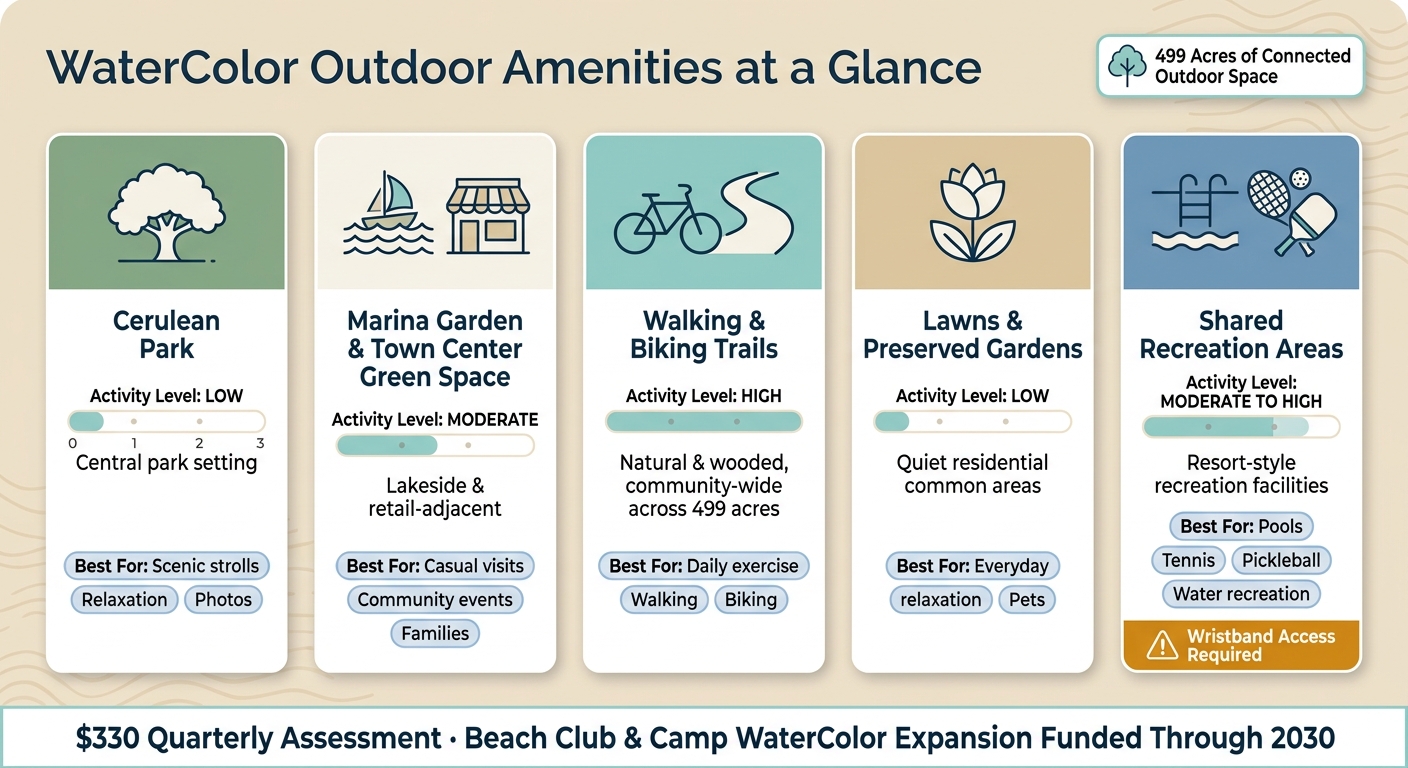
After the individual spotlights above, this snapshot makes it easier to see which spaces work best for day-to-day life, exercise, or a slower afternoon outside. Here’s a quick side-by-side look at WaterColor’s main outdoor spaces.
| Amenity | Activity Level | Setting | Best For |
|---|---|---|---|
| Cerulean Park | Low | central park setting | Scenic strolls, relaxation, and photos |
| Marina Garden and Town Center Green Space | Moderate | Lakeside & retail-adjacent | Casual visits, community events, families, and event-goers |
| Walking & Biking Trails | High | Natural & wooded, community-wide trail network across 499 acres | Daily exercise, walking, and biking for active residents and nature lovers |
| Lawns & Preserved Gardens | Low | Quiet residential common areas | Everyday relaxation and pets |
| Shared Recreation Areas | Moderate to High | resort-style recreation facilities | Pools, tennis, pickleball, and water-based recreation for families and athletes |
The mix is pretty simple: some spaces are built for calm, easy use, while others are meant for movement and recreation. You’ve got quiet lawns for unwinding, scenic park areas for a walk, and trails and shared recreation areas for people who want to stay active.
One detail worth noting: shared recreation areas require wristband access, which matters for visitors.
What These Spaces Offer Visitors and Future Residents
Taken together, these parks, trails, and shared spaces shape daily life in WaterColor for both visitors and owners. The trail network makes it easy to get around without a car. Families can bike to Camp WaterColor instead of piling into the car, and residents can use the paths for daily walks instead of taking short trips by road.
For buyers, that way of living can also affect resale and rental demand. Amenity-rich communities like WaterColor often see stronger nightly rates and peak occupancy than less-amenitized areas on 30A. Preserved green space and deeded beach access add even more pull.
For visitors, the setup makes a stay easier to navigate. The outdoor layout helps keep things simple and low-stress, with trails and beach access set away from traffic.
Buyers should also factor the $330 quarterly assessment through 2030 into total ownership cost.
Conclusion
Put it all together, and one point stands out: WaterColor’s outdoor appeal comes from the way its parks, trails, lawns, and shared spaces connect across 499 acres.
Those spaces shape how people move through the community, where they slow down, and how they spend time with family, friends, and neighbors. That connected layout gives WaterColor a walkable, family-friendly, resort-style feel on an everyday basis.
For visitors, that adds up to an easy stay centered on the outdoors. For buyers and owners, it means well-kept amenities backed by steady upkeep of shared spaces, which helps support long-term value.
That’s the core of WaterColor’s appeal: outdoor space woven into daily life.
FAQs
How walkable is WaterColor day to day?
WaterColor is easy to get around without a car. The streets are pedestrian-friendly, and the connected path system makes it simple for residents and visitors to walk or bike to parks, beach access points, and shared spaces.
The community also links straight to the 18.5-mile Timpoochee Trail, which gives you a safe, paved route through the surrounding 30A area.
Which amenities require wristband access?
In WaterColor, the homeowners association requires wristbands and set guest procedures for access to community amenities. These rules help manage capacity and keep the experience consistent for residents and visitors.
Because access rules can change, check the current process with your property manager or rental host before you arrive.
What does the $330 quarterly assessment cover?
The $330 quarterly special assessment helps pay for additions at the Beach Club and Camp WaterColor.
It’s set to stay in place through 2030 unless it was prepaid at the property’s closing.