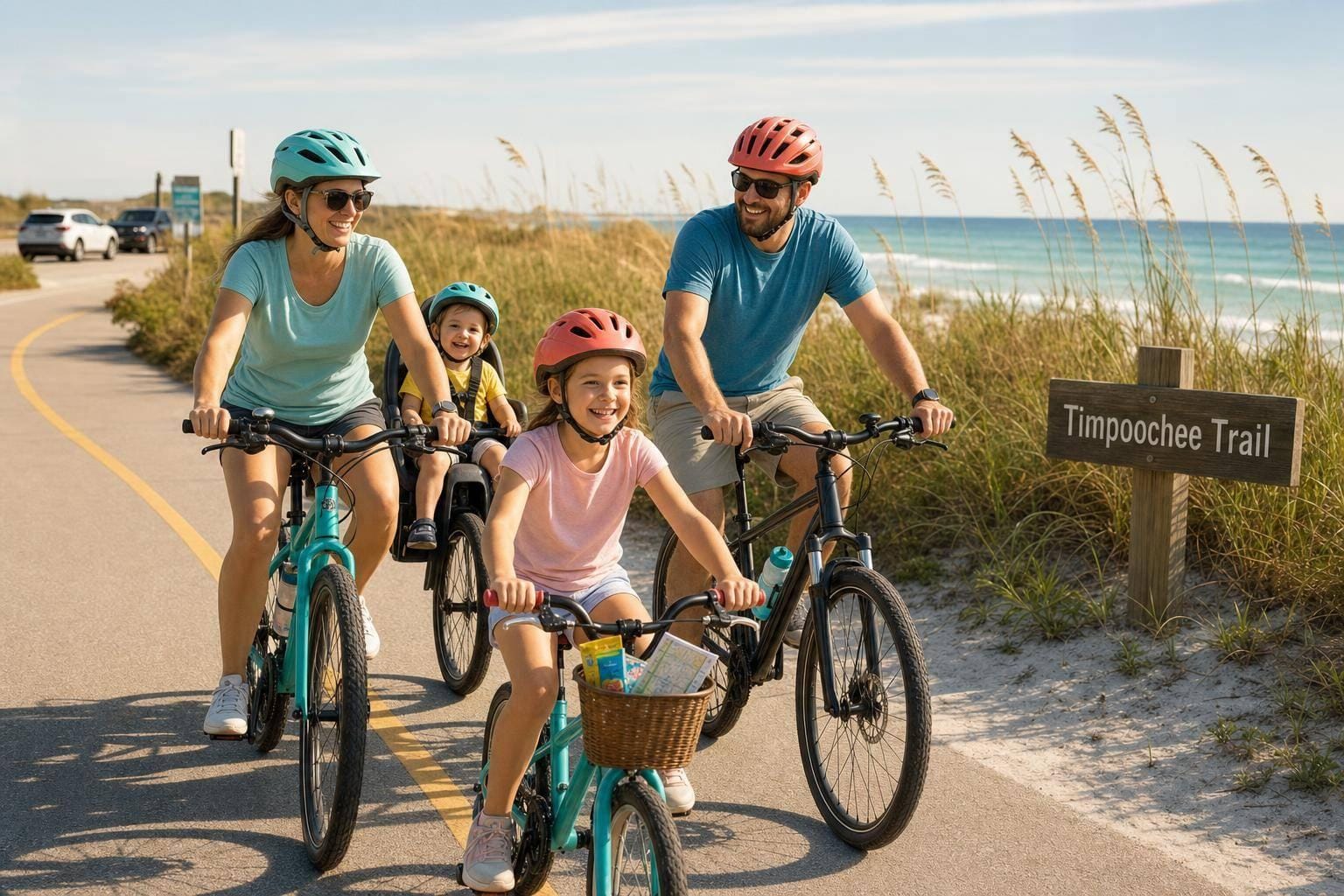
If I were planning a family day on the Timpoochee Trail, I’d keep it short, start early, and build the outing around one easy stop.
The trail runs about 18.5 to 19 miles along 30A, but most families do better with a 2- to 5-mile total ride for younger kids or 8 to 12 miles for older kids and teens. I’d aim for 7:30 to 9:00 a.m., bring one bottle of water per person per hour, and choose a section with parking and amenities, shade, restrooms, and food nearby.
Here’s the short version:
- Best for younger kids: Seagrove to Seaside or WaterColor to Grayton
- Best for easy parking: Dune Allen, Ed Walline, Blue Mountain, and Inlet Beach
- Best reset stops: Seaside, Gulf Place, WaterColor, Grayton Beach State Park
- Main things to watch: heat, road crossings, driveways, and busy town-center path traffic
- Good family rule: plan about half the distance you might do at home
The trail is paved, mostly flat, and set up well for bikes, strollers, scooters, and short walks. But the day usually goes better when I treat it like a simple outing - not an all-day mileage goal.
What matters most is this: pick the route based on the youngest rider, not the strongest one. That one choice tends to shape the whole day.
How to Plan a Family Ride or Walk Before You Go
Best Times to Go and Realistic Distances for Families
Start early, ideally between 7:30 and 9:00 a.m., when the air is cooler and traffic is lighter. That small timing choice can change the whole outing. By late morning in summer, the sun, humidity, and heat bouncing off the pavement can make the ride much tougher, especially for kids. If mornings aren't an option, head out after 5:00 p.m. instead. Just keep an eye on afternoon thunderstorms from June through September.
For distance, it's best to keep your plan simple and on the safe side. Younger kids usually do well with 2 to 5 miles total. A short out-and-back route with one planned stop often turns into a 1- to 2-hour outing once you factor in breaks, snacks, and the usual kid pace. Build the route around one easy stop for food, water, or restrooms.
Older kids and teens can often handle 8 to 12 miles in a half-day, especially if the route includes town stops for lunch, ice cream, or a beach break. A good rule of thumb: plan for about half your usual distance at home, then adjust based on the heat and your kids' energy that day.
What to Bring for Comfort and Safety
Pack for sun and heat first. Every rider should wear a helmet, and you should bring at least one bottle of water per person per hour. Broad-spectrum sunscreen, sunglasses, and a hat for time off the bike can help a lot on exposed stretches between towns. Closed-toe shoes are the best pick for both riding and walking.
Snacks matter more than people think. Even if cafés are nearby, kids can run out of steam fast. If you're bringing your own bikes, pack a few basic repair items:
- Spare tube
- Tire levers
- Mini-pump
- Multi-tool
- Bike lock for beach accesses or town centers
If you're riding with little ones, child seats, trailers, and tag-along bikes can work well here. They make family outings much easier for toddlers and early elementary-age kids.
Road Crossings, Heat, and Shared-Path Etiquette
The trail crosses 30A and driveways often, including near Dune Allen, Ed Walline, and Seagrove. It also briefly shares the roadway over Western Lake. Slow down well before every crossing. Teach kids to stop and look both ways instead of assuming drivers will stop for them. Around busier town centers like Seaside and Rosemary Beach, pay extra attention near parking-lot entrances.
On the shared path, stay to the right and pass on the left with a clear verbal warning or a bell. In busier stretches near cafés or beach accesses, go single-file and place an adult at the front and back of the group. If someone gets quiet, develops flushed skin, or complains of a headache, stop right away, cool down, and cut the ride short. WaterColor and Grayton Beach have more shade and make smart rest stops.
Once you've settled on your timing and distance, the next step is picking an access point with easy parking and a short, low-stress start.
sbb-itb-d06eda6
30A Bike Ride - Timpoochee Trail
Best Family Sections, Access Points, and Parking
Timpoochee Trail Family Ride Guide: Sections, Distances & Parking
Once you know how far your family can comfortably go, the next step is simple: pick the easiest place to start and the shortest turnaround for your kids.
Short Central Sections for Younger Kids
Two of the best short stretches for younger kids are Seagrove Beach to Seaside at about 2 miles one way and WaterColor to Grayton Beach at roughly 1.5–2.5 miles one way.
The Seagrove–Seaside stretch is the classic pick. You end at Seaside's town square, where Seaside Airstream food trucks, ice cream, and open lawns give kids room to move around and unwind.
The WaterColor–Grayton section works well too. It ends at Grayton Beach State Park, where you'll find beach access and nature activities and space to take a break.
For most families, these shorter sections take about 45–90 minutes with stops.
If you want to make the day easier, start at the access point closest to where you plan to turn around.
Western and Eastern Sections With Easy Parking
On the western end, three access points work especially well for families:
- Dune Allen Beach Access: about 27 free parking spaces, plus restrooms and ADA features
- Ed Walline Beach Access: about 39 free spaces, ADA restrooms, showers, and a two-story viewing platform
- Blue Mountain Beach Access: about 20 free spaces, restrooms, and ADA access
These lots all offer direct trail access.
On the eastern end, Inlet Beach Regional Access is the largest public beach access in South Walton. It has a large parking lot, restrooms, dune walkovers, and direct access to the trail's eastern terminus.
Rosemary Beach is another easy option. Town-center parking, brick-lined paths, shops, and nearby restrooms make it a smooth stop for strollers and families who want a walkable village feel.
Seacrest is handy if you're riding in by bike. Its beach access points include bike racks, so you can lock up and walk to the sand.
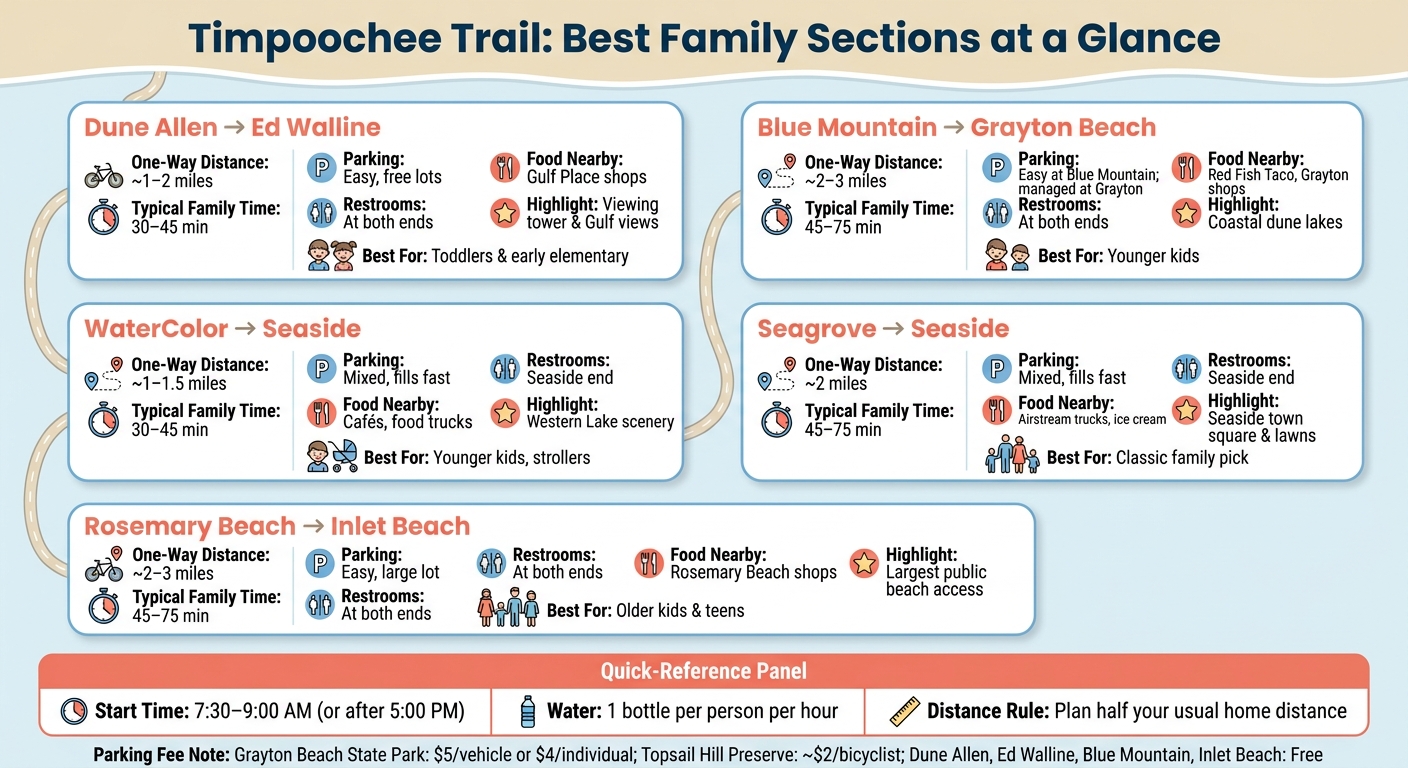
Use this quick guide to match each route with parking and a kid-friendly stop.
| Segment | One-Way Distance | Typical Family Time | Parking | Restrooms | Food Nearby | Attraction |
|---|---|---|---|---|---|---|
| Dune Allen → Ed Walline | ~1–2 mi | 30–45 min | Easy, free lots | At both ends | Gulf Place shops | Viewing tower, Gulf views |
| Blue Mountain → Grayton Beach | ~2–3 mi | 45–75 min | Easy at Blue Mountain; managed parking at Grayton | At both ends | Red Fish Taco, Grayton shops | Coastal dune lakes |
| WaterColor → Seaside | ~1–1.5 mi | 30–45 min | Mixed, fills fast | Seaside end | Cafés, food trucks | Western Lake scenery |
| Seagrove → Seaside | ~2 mi | 45–75 min | Mixed, fills fast | Seaside end | Airstream trucks, ice cream | Seaside town square, lawns |
| Rosemary Beach → Inlet Beach | ~2–3 mi | 45–75 min | Easy, large lot | At both ends | Rosemary Beach shops | Largest public beach access |
Parking and Public Access Details to Check Before You Arrive
Parking rules and availability can change a lot by season. Free lots at Dune Allen, Ed Walline, Blue Mountain, and Inlet Beach are usually the safest bet, but they fill up fast on summer weekends. Getting there before 9:00 a.m. can help quite a bit.
Grayton Beach State Park charges a day-use fee of $5 per vehicle or $4 per individual. It also has managed parking, restrooms, and beach access. Topsail Hill Preserve State Park charges about $2 per bicyclist.
Before you head out, check current closures and parking rules through official county updates or sowal.co. It's also smart to look for current detours before you leave.
ADA-accessible parking and restrooms are available at Inlet Beach, Blue Mountain, and Ed Walline, which makes those especially handy starting points for families using strollers or mobility devices.
Beach Towns, State Parks, and Stops Worth Adding to Your Day
Once you’ve picked your starting point, keep the day simple: add one town stop and one park stop. That’s usually enough to break up a family ride without turning it into a long, stop-and-start haul. For most groups, one place to grab food and use the restroom, plus one quieter nature break, hits the sweet spot.
Town Stops With Food, Restrooms, and Space to Rest
Gulf Place near Ed Walline is a good reset for younger kids. It has food, restrooms, and beach access all in one area, which makes it easy to stop, regroup, and get moving again.
Seaside and WaterColor are the simplest central reset points on the route. You’ll find food, shade, restrooms, and an easy place to turn around if that’s part of the plan.
Rosemary Beach tends to fit a longer ride with older kids a bit better. If you want an eastern finish, Inlet Beach is often the easier pick, with beach access, restrooms, and food close by.
State Parks and Nature Areas Near the Trail
If the town centers feel a bit busy, swap that kind of stop for a park.
Grayton Beach State Park makes a natural mid-ride break. It gives you beach access, dune lake views, and short walking trails, so it’s easy to stretch your legs without adding much work to the day.
Deer Lake State Park is a quieter boardwalk stop near mile 13–14, with dune lake views and a calmer feel than the busier town areas.
From the west end, Topsail Hill Preserve State Park works well for a short out-and-back. Farther east, Camp Helen adds Lake Powell scenery near Inlet Beach.
Conclusion: How to Pick the Right Timpoochee Trail Day for Your Family
The best family day on the Timpoochee Trail comes down to four choices: distance, start time, parking, and stops. Family outings often hinge on simple planning before you leave the house. Get those basics right, and the trail is easy to enjoy. Skip them, and the day can feel a lot longer than it should.
Pick the route based on your youngest rider. Shorter rides tend to work better for little kids, while older riders can handle longer stretches. It also helps to start early, before the day gets hot and traffic picks up.
After you sort out the distance, parking is the next thing that can shape the whole outing. Check parking and hours before you go, especially for busy trailheads and state parks. A fast parking check can save a lot of hassle once you get there.
Key Takeaways for a Smooth Family Outing
Use the simplest plan that keeps the ride easy and kid-friendly.
Bring extra water, walk bikes through crossings, and have adults lead younger riders. Plan breaks in towns and parks, too. A stop in Seaside or a break at Deer Lake State Park gives kids something to look forward to and helps keep the pace relaxed.
Check sowal.co before you go for current timing, parking, and local trail updates.
FAQs
Is the Timpoochee Trail safe for beginners and young kids?
Yes. The Timpoochee Trail is a great pick for beginners and young kids because it runs flat and paved along 30A.
It’s also a designated multi-use path, set apart from heavier traffic. That gives families a safer, less stressful place to ride than the main roads.
Can we rent bikes, trailers, or child seats nearby?
Yes. It’s easy to find bike rentals near the Timpoochee Trail. Local shops along 30A usually offer cruisers, hybrid bikes, mountain bikes, and e-bikes.
Many rentals also come with helmets and locks. If you need a trailer or child seat, check with the shop when you book to see what’s available.
What should we do if parking lots are full?
To avoid parking hassles during peak season, get there early or go during slower hours.
If a lot is full, use marked overflow parking like Watersound Town Center. At Grayton Beach State Park, once the park hits capacity, it may close for a period to all visitors, including cyclists and pedestrians.
For more local tips on 30A, check sowal.co.