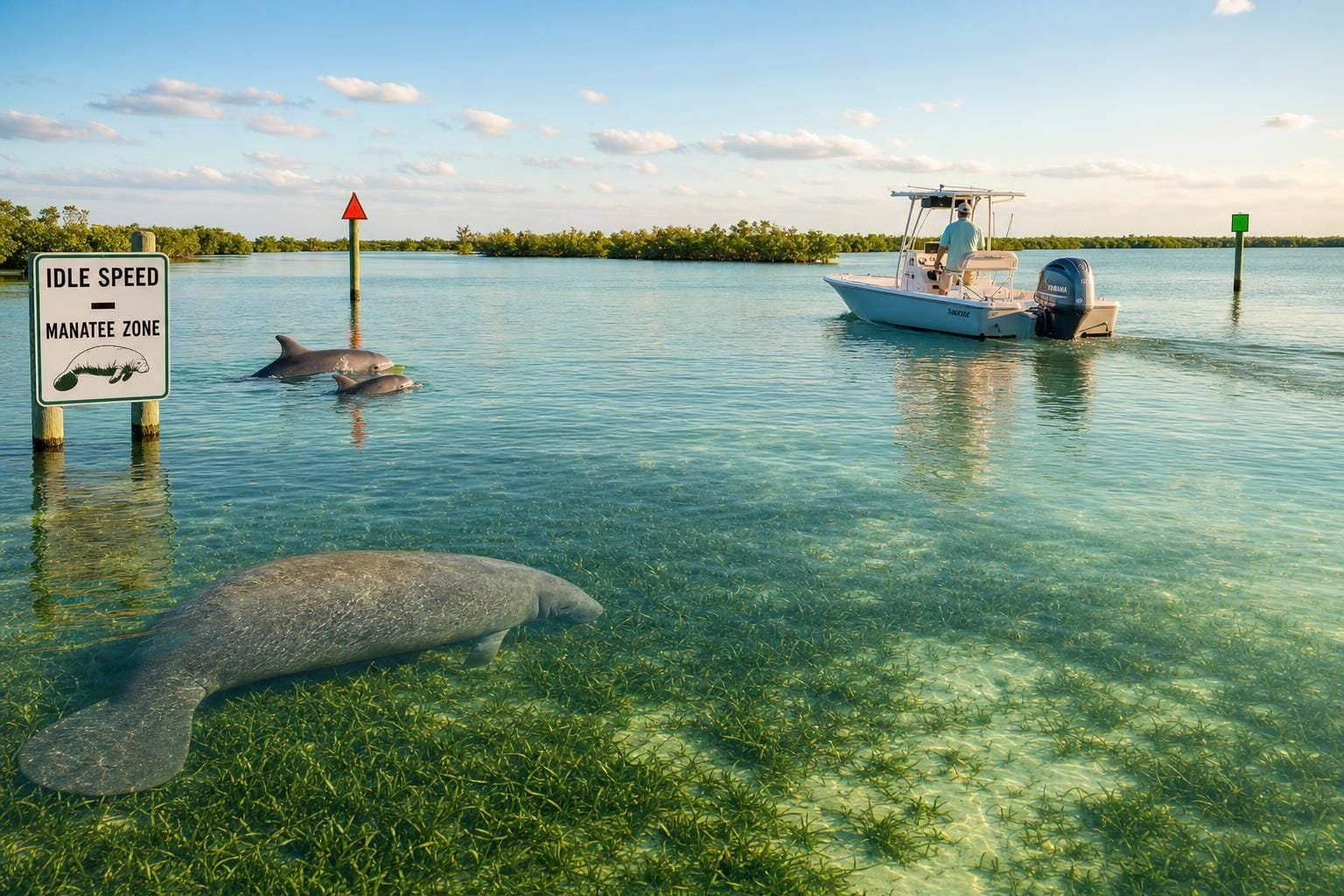
Boats are one of the top human causes of harm to manatees in Florida, and dolphins face risk too. If I want to cut that risk, the main steps are simple: slow down, stay in marked channels, keep at least 50 yards from dolphins, never feed or chase wildlife, and watch for manatees in shallow water from late spring through early fall.
Here’s the short version:
-
Boat strikes and propellers are the biggest danger
- Watercraft cause 84% of documented human-caused manatee deaths
- About 96% of adult Florida manatees have scars from at least one boat strike
- In 2023, Florida recorded 86 manatee deaths from watercraft
-
South Walton has extra risk areas
- Choctawhatchee Bay channels
- Shallow seagrass flats
- Marinas and sandbars
- Nearshore routes along 30A
-
Dolphins face more than strikes
- Getting too close, chasing, and feeding are illegal
- Boat noise can disrupt feeding, movement, and communication
- Mother-calf pairs are at higher risk around heavy boat traffic
-
Simple boating habits lower harm
- Follow idle-speed, no-wake, and slow-speed zones
- Use a spotter and wear polarized sunglasses
- Shift to neutral if an animal comes near
- Avoid seagrass, fuel leaks, trash, and discarded fishing line
Bottom line: if I boat slower and give animals room, I lower the chance of strikes, stress, and habitat damage at the same time.
The Main Boating Hazards: Strikes, Propellers, Close Approaches, and Noise
Vessel Strikes and Propeller Injuries in Shallow, Busy Water
Fast boats can injure manatees and dolphins through hull strikes and propeller cuts. Manatees face the highest danger because they’re large, slow-moving, and often don’t have enough time or space to get clear of a boat’s path. Florida strike data from 2016 to 2020 found that more than 72% of hits landed on the back and about 16% on the tail, which suggests the animal tried to dive as the boat passed. Propellers alone account for about 36% of documented watercraft strikes, while propeller-and-skeg combinations make up another 35%.
The toll in Florida has stayed high. In 2023, the state recorded 86 manatee deaths from watercraft out of 518 total deaths statewide, and since 2000, an average of 82 manatees per year have been killed by boats in Florida. About 96% of adult Florida manatees carry scars from at least one boat strike.
Dolphins can turn and move faster than manatees, but that doesn’t mean they’re safe. Calves are small and easy to miss when they surface. Adults that are feeding or socializing in narrow passes may also get hit before they can react. The danger goes up when boats run fast through shallow water, cross seagrass flats outside marked channels, or punch the throttle after slowing near a sandbar.
Strikes are the clearest danger, but the way people operate around wildlife can be a problem too.
Harassment From Chasing, Feeding, and Getting Too Close
Federal law treats harassment as more than touching an animal. Speeding toward dolphins, circling them, following them closely, shadowing mother-calf pairs, or tossing fish scraps are all illegal.
Feeding wild dolphins is illegal under federal rules. It also changes how they behave. Once dolphins connect boats with food, they start hanging around marinas, boat channels, and moving vessels - the same places where propeller strikes happen most often. Some bring calves into those same high-risk spots. They also become more likely to take bait from fishing lines, which can lead to hooks, line entanglement, and fin injuries.
Put plainly, harassment doesn’t just break the law. It trains dolphins to stay close to boats, which pushes up their risk of strike and entanglement.
NOAA recommends staying at least 50 yards (150 feet) away from wild dolphins when viewing from a boat. A good rule of thumb is simple: if the animal changes direction, speeds up, or keeps diving when you come near, you’re already too close.
Even when boaters don’t crowd animals, sound can still be a problem.
Engine Noise and Heavy Traffic Near Feeding and Resting Areas
Dolphins depend on sound to communicate, find their way, and locate food. Boat noise can mask dolphin calls and make that much harder.
Manatees react to noise and traffic too. One study found tour-boat noise near manatees reached 96–117 dB and lasted up to 10 hours a day. Studies tracking manatees in seagrass beds show they use quieter grassbeds more often and spend less time in areas with concentrated morning boat traffic, even when those spots still have good food.
That matters because the harm isn’t limited to direct contact. Repeated disturbance can push animals out of feeding and resting areas, add stress, and burn energy they need for day-to-day survival. In waters like these, slower speed and more space are the safest default.
sbb-itb-d06eda6
How Boaters Can Reduce Harm on the Water
The safest response is simple: slow down, keep a lookout, and give wildlife space to move.
Follow Slow-Speed Zones, Marked Channels, and Seasonal Protection Rules
Speed plays a big part in deadly manatee strikes, so Florida sets idle-speed, no-wake, and slow-speed zones in waterways where manatees travel, feed, or rest. In South Walton's shallow bays and flats, those rules matter even more. In these areas, boats must stay at steerage speed and leave no visible wake.
In many Florida waters, seasonal manatee protection zones call for lower speeds from April 1 through November 15. Before you launch near Choctawhatchee Bay or 30A, check ramp and marina signs along with official maps. Local guides like sowal.co can also help you map out common boating routes and local conditions.
Stay in marked channels whenever you can. Channels are deeper, which gives manatees more room to surface and gives you more time to react. Running outside channels at speed, especially across seagrass flats, puts animals at risk and can scar the bottom habitat they depend on.
Speed control matters most when you pair it with a careful lookout.
On-the-Water Habits for Spotting and Avoiding Wildlife
Assign one spotter to watch ahead and to both sides. Wear polarized sunglasses to cut glare and make it easier to see manatees, dolphins, and seagrass below the surface. That extra bit of visibility can help you avoid a last-second turn or a burst of throttle.
Look for manatee swirls, mud trails, snouts, dorsal fins, and splashes. If you spot wildlife, slow down at once and hold a steady course. Don't make sudden turns or speed up.
When visibility drops because of sun glare, rain, fog, or heavy traffic, slow to idle speed near shore, in shallow water, and around seagrass beds or creek mouths.
Once you see wildlife, the goal is to watch without crowding it.
How to Watch Dolphins and Manatees Without Disturbing Them
If an animal comes near the boat, shift the engine into neutral and let it pass. Don't trail behind it afterward. Staying still and quiet keeps the propeller out of the mix and cuts down on disturbance.
If you want a closer look, use binoculars or a camera with a zoom lens instead of moving the boat forward. Don't place the boat directly in front of a traveling animal or group. Stay off to the side so their path stays open. After a short look, move away. Hanging around too long can disturb animals that are feeding, nursing, or resting.
Passengers should follow crew instructions and avoid asking for closer passes. Picking operators who follow manatee and dolphin protection guidelines helps keep people and animals safer on the water.
Protecting Habitat: Pollution, Wake Damage, and Local Stewardship
Even when a boat doesn't hit an animal, it can still harm the place that animal needs to live.
Fuel Leaks, Trash, and Fishing Line in Local Waters
Boats can damage the habitat dolphins and manatees rely on. Small-engine fuel and oil leaks are a common source of coastal pollution. And it doesn't take much. Even small drips can coat seagrass, block light, and add toxins to shallow bays.
A few simple checks before you leave the dock can help:
- Inspect fuel lines, hose clamps, and seals.
- Place an absorbent pad in the bilge and under the fuel fill to catch drips before they reach the water.
Discarded fishing line is another problem, especially in seagrass beds where manatees feed. FWC necropsies often find monofilament in manatees. The line can cut into flippers, limit movement, or cause drowning if an animal can't reach the surface. Never throw line overboard or leave it on a dock. Many Florida marinas have monofilament recycling bins, so if you don't see one, ask dock staff where it's located. Keep plastic waste in a lidded container onboard and bring it ashore.
Habitat damage doesn't stop when the engine turns off.
Wake Damage and Seagrass Loss in Shallow Areas
Seagrass is the main food source for manatees, and boat traffic is one of the biggest threats to it. Propeller scars from boats running in shallow water can take years to heal, and heavy or repeated damage can wipe out an entire seagrass bed. Wake action makes things worse. Waves from boats moving fast through narrow channels can stir up bottom sediment, make the water murkier, and force seagrass into a much shallower growth zone.
If you need to cross a shallow flat, trim up the motor and idle until you reach deeper water. If you run aground, push or pole off instead of powering out with the propeller. When anchoring, pick bare sand instead of visible grass.
Check Local Guidance Before You Go
In South Walton, waterways include shallow flats, narrow tidal creeks, and seagrass beds that may not stand out on a basic chart. That's why local maps matter. sowal.co can help visitors find local marinas, routes, and charters. Use local maps and FWC speed-zone rules to plan around shallow flats, creeks, and seagrass beds.
Conclusion: Boating Habits That Protect Dolphins and Manatees
The risks covered in this article show up on everyday trips through South Walton’s shallow bays and coastal waters. FWC data shows that watercraft are still a major cause of manatee deaths across Florida. The main point is simple: slow down.
Follow idle-speed and no-wake zones. Stay at least 50 yards from dolphins. Give manatees more space. Never feed or chase either animal, and throttle down early in shallow water or areas where wildlife is active. If other boats are already near the same animal, back off. Noise and wake build fast.
Keep fuel, fishing line, and trash out of the water. Those things harm the seagrass and fish habitat that dolphins and manatees rely on.
Before you launch on Choctawhatchee Bay or along 30A, check local routes and speed-zone maps. sowal.co can help you plan routes and timing before you launch. Use it with current FWC speed-zone maps to map out where to slow down.
These habits lead to fewer groundings, calmer passes through shallow water, and better odds of seeing dolphins and manatees act the way they should in the wild.
FAQs
How can I tell if I’m too close to a dolphin?
Use two checks: distance and behavior.
Keep at least 50 yards away from dolphins, whether you're watching from shore or from a boat. If you can't hold that distance, you're too close.
Also move back if the dolphins seem disturbed. Watch for signs like rapid or erratic swimming, tail slapping, loud exhalations (“chuffing”), or any change in what they were doing because of your presence. Don’t feed or touch them.
What should I do if a manatee surfaces near my boat?
Calmly back away and give the manatee space. Stay at least 50 feet away, and do not touch, feed, or surround it. If the animal is resting or feeding, leave it alone and avoid bothering it.
Slow down and move in a steady, predictable way so you don't create sudden noise, wake, or propeller risk. And if you're near protected or shallow resting areas, don't enter them.
When are manatees most likely to be in shallow water?
Manatees are most likely to be in shallow water during the warmer months, when rising water temperatures bring them back closer to shore.
Along 30A, that usually means April 1 to November 15. During that stretch, they return from winter warm-water refuges to spots like Choctawhatchee Bay and nearby canals, where they feed and rest.