If I want the short answer: go in spring or fall, show up between 9:00 a.m. and 11:00 a.m., and plan around the best days to visit 30A farmers markets before I book the rest of my trip.
Most 30A markets run on a 9:00 a.m. to 1:00 p.m. schedule, and summer heat climbs fast, with highs around 89°F to 90°F. That means timing matters more than most visitors think. If I arrive late, I risk thinner produce tables, more heat, and fewer parking spots.
Here’s the simple breakdown:
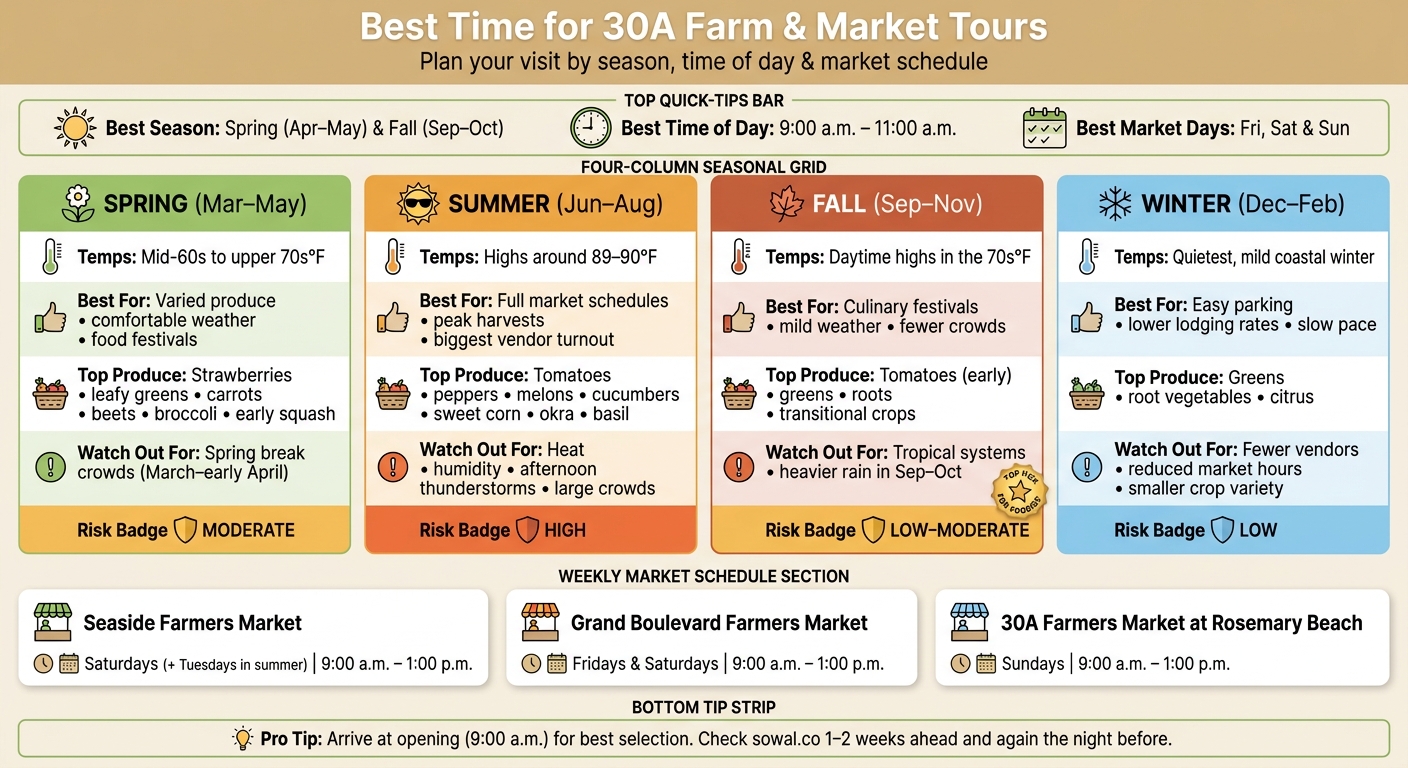
- Best overall season: April–May and September–October
- Best time of day: 9:00 a.m. to 11:00 a.m.
- Best for top produce choice: early morning
- Best for fewer crowds: late fall and winter
- Best for the biggest market activity: summer, but only if I go early
- Main risk in summer: heat, humidity, and afternoon storms
- Main risk in spring: spring break traffic in March and early April
- Main risk in fall: rain and tropical systems, mostly in September and October
- Main risk in winter: fewer vendors and a smaller crop mix
If I’m planning a food-focused trip, I’d keep three things in mind:
- Pick the season based on what I want most - produce mix, low crowds, or festival dates.
- Pick the market day next - not after beach plans and brunch.
- Check the market calendar and weather twice - once 1–2 weeks ahead and again the night before.
A quick look at the main tradeoffs:
| Season | Best For | Main Downside |
|---|---|---|
| Spring | Mild weather, good produce mix | Spring break crowds |
| Summer | Peak harvests, more market activity | Heat, humidity, storms |
| Fall | Food events, lighter crowds, mild temps | Rain risk, tropical weather |
| Winter | Quiet pace, easier parking, lower lodging rates | Fewer vendors, less variety |
I’d also match my trip to what I want to buy. Spring leans toward strawberries, greens, carrots, and squash. Summer brings tomatoes, melons, cucumbers, corn, and okra. Winter is more about greens, roots, and citrus.
Bottom line: if I want the best mix of comfort, produce, and crowd level, I’d pick spring or fall mornings and build the trip around a Friday, Saturday, or Sunday market. Then I’d confirm hours before I go so I don’t end up at an empty square.
Best Time for 30A Farm & Market Tours: Season-by-Season Guide
Things to Do on 30A ⎮The 30A Farmer's Market! 🍉🫑🥟
sbb-itb-d06eda6
Best Season For Farm And Market Tours On 30A
Each season on 30A feels a little different. Some travelers want the biggest produce mix. Others want a busier market scene, or the opposite: less noise, less traffic, and more room to wander.
If you want the best mix of weather, produce, and crowd levels, the shoulder seasons usually win. April to May and September to October tend to hit that sweet spot.
Spring: Good Produce And Comfortable Weather
March through May is one of the best times for farm and market tours. Daytime highs usually land in the mid-60s to upper 70s °F, humidity is lower, and afternoon thunderstorms are less common than they are in midsummer. That makes a big difference when you're walking through open-air markets or stopping by a farm stand.
On the produce side, spring usually brings strawberries, leafy greens, carrots, beets, broccoli, and early squash. If you want to pair your market trip with a food event, late April also lines up with the South Walton Beaches Wine & Food Festival.
One catch: spring break can change the vibe fast. March and early April often bring more traffic and fuller parking lots. For many visitors, mid-March through late April on a weekday offers the best mix of strong vendor turnout and easier crowds.
Summer: Full Market Activity But Bigger Crowds
Summer is when the markets are busiest. Many spots add extra weekday dates, and the Seaside Farmers Market adds Tuesdays in summer. This is also peak warm-season harvest time, so stalls are often packed with tomatoes, peppers, melons, cucumbers, sweet corn, okra, and basil.
The downside is pretty simple: summer is hot, humid, and crowded. Visitor numbers are highest from Memorial Day through early August, parking gets tougher, and afternoon thunderstorms show up often in midsummer.
The best move is to go early. Arrive right at opening, usually around 9:00 a.m. Then use the afternoon for the beach or something indoors. If your schedule allows it, a midweek visit can also save you from the biggest Saturday rush.
Fall And Winter: Fewer Crowds And Easier Planning
Fall (September–November) is often the top pick for travelers who care most about food. Humidity drops, daytime highs settle into the 70s °F, and the area leans into festival season with events like the Harvest Wine & Food Festival, the Seeing Red Wine Festival, and Alys Beach Crafted.
It also gets easier to move around. Parking in places like Seaside or Rosemary Beach is usually simpler, and vendors often have more time to chat. September and October add another perk: warm Gulf water with crowd levels that are far easier to deal with than peak summer.
Winter (December–February) fits a different kind of trip. Crowds thin out, seasonal lodging rates drop, and the pace slows way down. Mid-January through early February is usually the quietest part of the year. Core markets like the 30A Farmers Market at Rosemary Beach and the Grand Boulevard Farmers Market stay open year-round on their usual weekend schedules.
That said, winter does come with trade-offs. Some markets cut vendor counts or switch to less frequent schedules, and produce tends to narrow to greens, root vegetables, and citrus. If you're flexible and willing to check market calendars before you go, winter can still be a pleasant time to visit. Just expect a smaller selection and a calmer atmosphere than you'd get in spring or fall.
| Season | Best For | Watch Out For |
|---|---|---|
| Spring (Mar–May) | Varied produce, comfortable temps | Spring break crowds in March and early April |
| Summer (Jun–Aug) | Full market schedules, peak harvests | Heat, humidity, afternoon storms |
| Fall (Sep–Nov) | Culinary events, mild weather, fewer crowds | Tropical systems and heavier rain in September and October |
| Winter (Dec–Feb) | Quiet pace, easy parking, lower rates | Reduced market hours and vendor turnout |
Best Time Of Day And Best Market Days To Visit
Once you’ve picked the season, the next step is simple: choose the right day and show up at the right time.
Morning Visits Offer The Best Selection And Weather
For most 30A farmers markets and tours, the sweet spot is 9:00 a.m. to 11:00 a.m. That’s when tables are usually the most stocked, and shopping feels easiest.
You also get a more comfortable start to the day. On 30A, that matters. A morning market run is a lot nicer than wandering around in the heavier midday heat.
Late Visits Mean Lighter Crowds But Fewer Choices
If you’d rather deal with fewer people and don’t mind missing a few top picks, the last hour can still be a good option.
The trade-off is pretty clear: popular items are often sold out by then. On the other hand, some vendors may cut prices on what’s left, so you might still come across a good deal.
Weekly Market Schedule On 30A
Use these market days and hours to plan your stops:
- Seaside Farmers Market - Saturdays; Tuesdays in some summer weeks
- Grand Boulevard Farmers Market (Miramar Beach) - Fridays and Saturdays, 9:00 a.m. to 1:00 p.m.
- 30A Farmers Market at Rosemary Beach - Sundays, 9:00 a.m. to 1:00 p.m. at North Barrett Square
A Friday-to-Sunday trip can line up well if you want to visit Grand Boulevard, Seaside, and Rosemary Beach without giving up your middle-of-the-day beach time. Rosemary Beach also hosts holiday markets around Thanksgiving, Christmas Eve, and New Year's Eve during that same 9:00 a.m. to 1:00 p.m. window.
Hours and special dates can change, so check current listings on sowal.co before you lock in your plans. It’s also smart to review local event calendars before booking a festival weekend.
How To Plan Around Harvest Days, Festivals, And Weather
Match Farm Visits To Harvest Windows, Not Just Travel Dates
Once you know the season, narrow your trip around the crop window you want. Book around crop windows, not trip dates. Crops follow weather and season, not your itinerary.
Before you book, check the timing for the crop you want. Then confirm availability 2–3 weeks before your trip and check again a few days before you go. Ask farms directly if your target crop will still be in season during your travel week, and whether u-pick fields are open or if they’re offering pre-picked produce only.
A lot of farms post weekly updates on their websites and social media with current crop status. That makes those channels one of the best places to watch before you lock anything in.
If your trip overlaps with a festival weekend, make that call first. Then build your farm stops around it.
Decide Between Festival Weekends And Quieter Food Tours
Fall food festivals bring bigger crowds and more programming. You get more buzz, more curated tastings, and chef events that you probably won’t find on a quiet Tuesday in October.
But there’s a trade-off. During festival weekends, lodging rates go up, parking gets harder, and the easy pace that makes farm stands and markets fun tends to disappear.
It helps to pick one main focus for the trip:
- Build the itinerary around a festival (or use an itinerary generator)
- Or plan for slower farm and market visits
Trying to squeeze both into a short trip usually means neither gets the time it deserves. If the festival comes first, plan farm visits on the weekdays right before or after the main event days. Roads are calmer, and farms usually feel a lot less hectic.
Check Weather And Local Event Calendars Before You Finalize Plans
Weather should shape the hour you go, not just the date. In July, August, and September, summer afternoons often bring thunderstorms. That doesn’t mean you should skip the season. It just means you’re better off planning outdoor farm and market time in the morning, then leaving the afternoon open for indoor meals, galleries, or a shaded porch.
Before you lock in dates, check sowal.co for free events in South Walton, market schedule changes, and farm updates. Then compare that with each farm’s social media and a short-term weather forecast. Check plans 1–2 weeks ahead and again the night before.
Conclusion: The Best Time Depends On Your Food Priorities
When you stack up the season, crowd levels, and weather, the right time comes down to what matters most to you. There isn’t one perfect season for farm and market tours on 30A. Spring and fall give you the best mix of comfort and variety, summer has the most going on, and winter is the quietest.
No matter when you go, showing up between 9:00 a.m. and 11:00 a.m. usually gives you the best shot at top picks and a more comfortable visit. On busy weekends, popular items can sell out fast.
Once you’ve picked your season and morning time, match your trip to the harvest you want most. If you’re after a certain crop, find its peak harvest window and book a stay that includes at least one market day and one farm visit.
Before you lock anything in, check sowal.co for market updates and event listings. Then confirm hours with the markets you plan to visit a few days ahead, and check again the night before. That small step can save you from showing up to a canceled market or shortened hours.
Know your priority, plan your morning, and confirm before you go.
FAQs
How early should I arrive for the best picks?
Arrive early - ideally right when a place opens, or soon after - if you want the best selection. In South Walton, busy spots can fill up fast, and the most popular items often sell out early.
That matters even more during peak times like spring break, summer, and holiday periods. On those days, it’s smart to get there before the lunch or dinner rush starts.
For morning wildlife or ecotour-style stops, 7–10 AM is usually the sweet spot.
Which season is best for my favorite produce?
Check out local farmers markets along 30A, especially the Saturday morning market in Seaside and the year-round South Walton markets. They’re your go-to spot for fresh, seasonal produce all year.
If you want to spot seasonal plant life, look for Gulf Coast lupines in the spring and woody goldenrod in the fall. For more local food tips and community happenings, head to sowal.co.
How do I plan around weather and festival weekends?
On 30A, plan summer outings for early morning or evening to avoid the worst heat and humidity. It also helps to leave room in your plans for the afternoon thunderstorms that pop up so often.
Festival weekends usually bring more crowds and traffic. To dodge some of the slowdowns, eat earlier than usual or visit midweek. It’s also smart to check local event calendars and official park websites for any schedule or hours changes.
Pair farm and market timing with more local bites in our Food & Dining Guide.