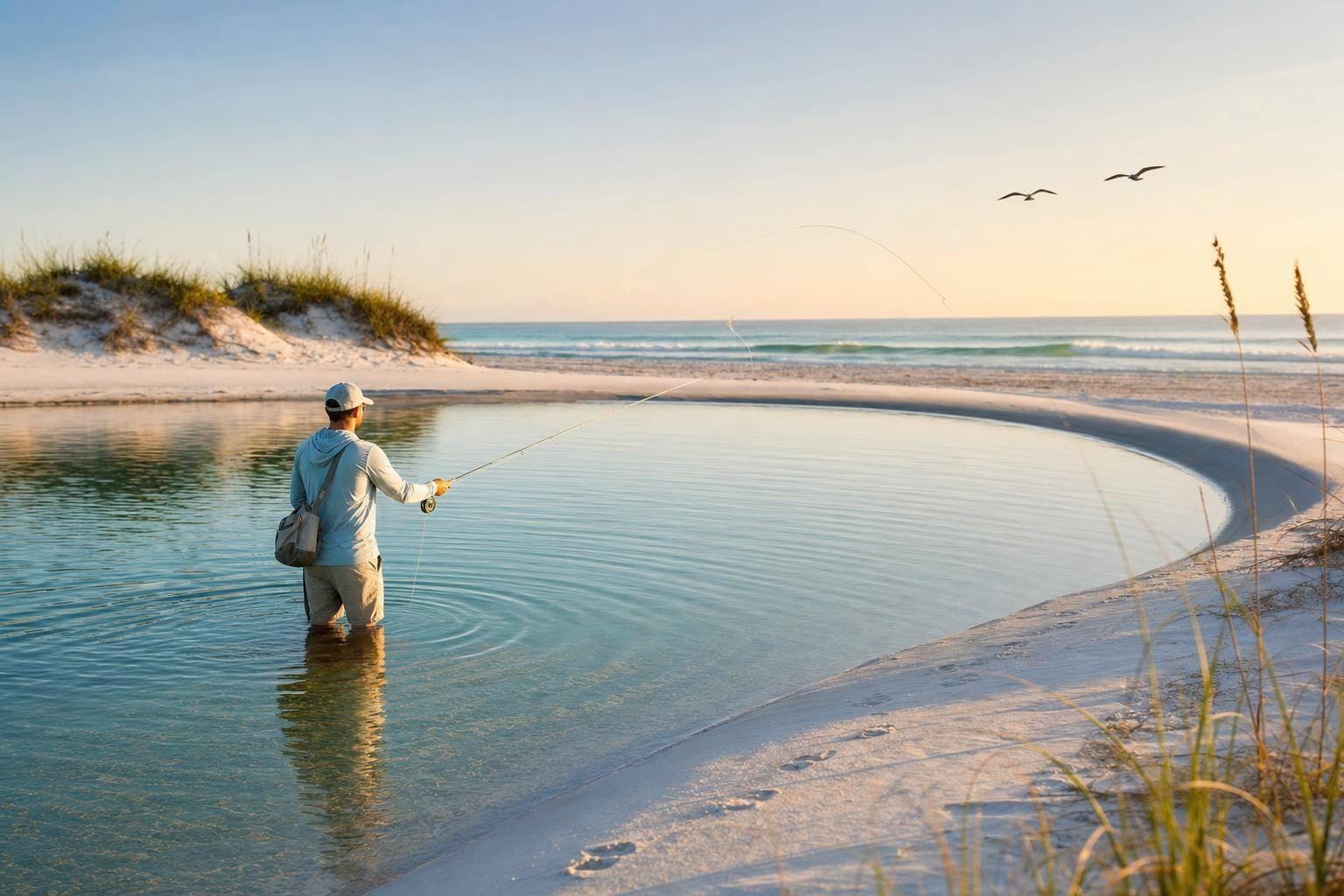
If I were brand new to fly fishing on 30A, I’d start in protected water, not open surf. The best first picks are Choctawhatchee Bay, Western Lake, Eastern Lake, Lake Powell, and the Grayton/Seagrove surf edges near dune lake outflows.
Here’s the short version:
- Choctawhatchee Bay is the easiest all-around first stop for calm water, wading, and basic casting.
- Western Lake is a simple park option with calm water and short walk-in access.
- Eastern Lake works well for short shore sessions and light practice.
- Lake Powell gives you protected shoreline and a bigger dune lake setup.
- Grayton/Seagrove surf near outflows is the step-up option when the Gulf is calm.
The article makes one point clear: beginners do better in low-wave water with open casting space and easy public access. That matters because most new anglers only need 30- to 40-foot casts, a 7- or 8-weight rod, and a few flies like Clousers and shrimp patterns to get started.
You’ll also see a simple pattern in the fish list. In calmer water, I’m more likely to focus on redfish, speckled trout, flounder, bass, and bream. Near surf outflows, whiting and pompano become more realistic targets.
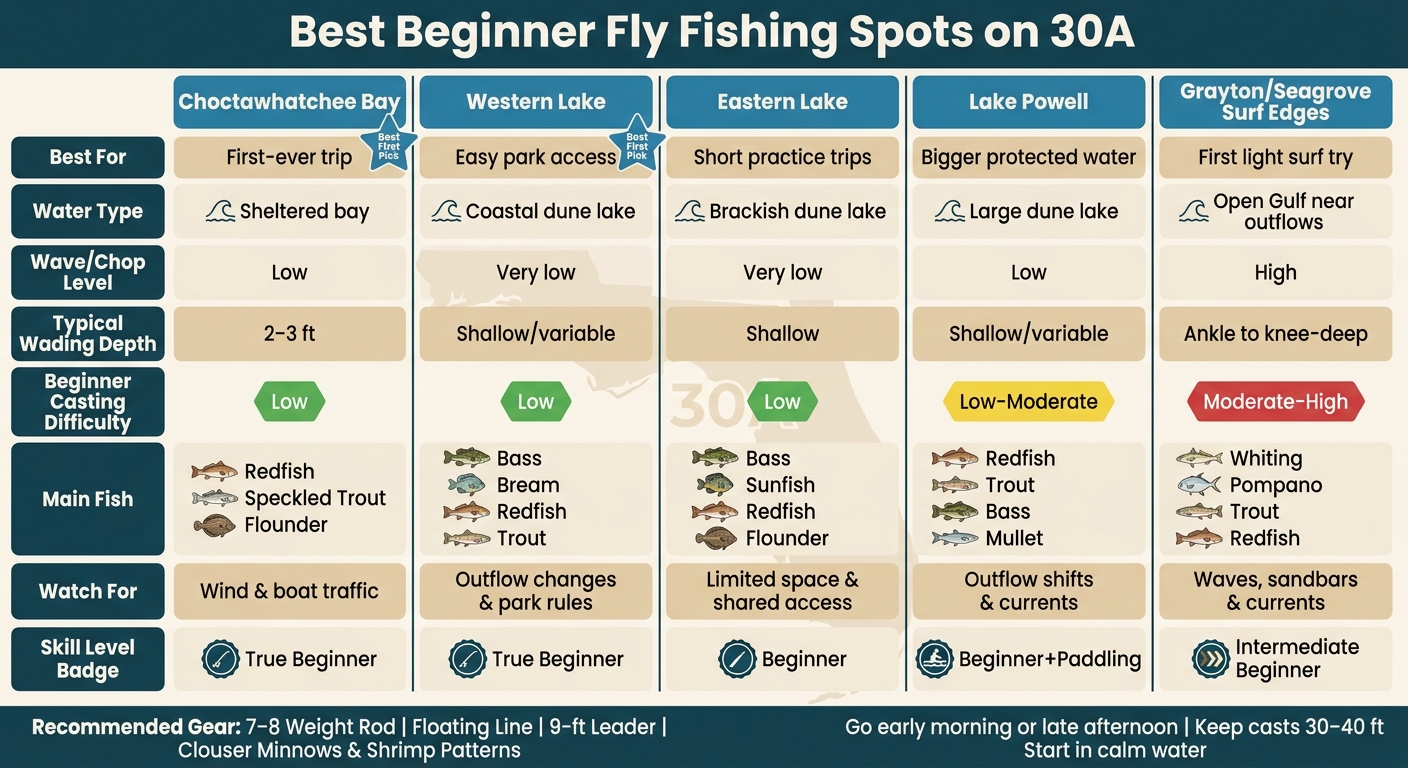
Best Beginner Fly Fishing Spots on 30A: Quick Comparison Guide
Inshore Saltwater Fly Fishing - How To
Quick Comparison
| Spot | Best For | Water Type | Main Fish | Watch For |
|---|---|---|---|---|
| Choctawhatchee Bay | First-ever trip | Sheltered bay | Redfish, trout, flounder | Wind, boat traffic |
| Western Lake | Easy park access (ideal for coastal dune lake paddling) | Coastal dune lake | Bass, bream, redfish, trout | Outflow changes, park rules |
| Eastern Lake | Short practice trips | Brackish dune lake | Bass, sunfish, redfish, flounder | Shared space, limited room |
| Lake Powell | Bigger protected water | Large dune lake | Redfish, trout, bass, mullet | Outflow shifts, current |
| Grayton/Seagrove surf edges | First light surf try | Open Gulf near outflows | Whiting, pompano, trout, redfish | Waves, sandbars, current |
My takeaway: if you want the lowest-stress start, pick Choctawhatchee Bay or Western Lake, go early morning or late afternoon, and keep the trip short.
What Makes a 30A Fly Fishing Spot Good for Beginners
Not every stretch of water along 30A is a good first stop for someone learning to fly fish. Some places make the whole thing feel more doable. Others can turn a first trip into a battle with wind, waves, and tangled line.
The five spots below work well for beginners because they share a few simple traits. If you're sizing up a place to fish, these are the four things worth checking first.
Sheltered Water vs. Open Gulf Surf
Sheltered water is usually the better choice when you're new to a fly rod. Choctawhatchee Bay and the coastal dune lakes are calmer than open Gulf surf, which makes casting and line control much easier for beginners.
On the bay's shallow grass flats near Santa Rosa Beach, you can wade knee- to waist-deep for long distances and focus on your cast instead of fighting surf. That's a big deal when you're still getting used to timing, line pickup, and keeping your loop under control.
Dune lakes like Western Lake and Eastern Lake are also easier to manage. They're sheltered by dunes and vegetation, so even on breezy days the water tends to stay more fishable.
Open Gulf surf is a different story. Waves, side currents, and shifting sandbars make everything harder, especially on a first trip. You’re not just casting at that point - you’re also trying to read moving water and keep your line from getting pushed around.
Easy Access for Short Trips
Good beginner spots also tend to be simple to get in and out of. These places share practical access features like public parking, easy shore access, and clear launch points.
State parks like Grayton Beach State Park and Camp Helen State Park make things even easier. They offer restrooms, marked paths, and posted rules, which cuts down on confusion and helps first-timers spend more time fishing and less time figuring out where to go.
That kind of setup matters more than people think. If a spot is easy to reach, it's much simpler to fit in a short morning session or a low-pressure practice trip.
Room to Cast
When you're learning, space matters. Most beginners need enough room for short overhead casts in the 30- to 40-foot range and basic roll casts without trees or brush right behind them.
Choctawhatchee Bay's broad, gently sloping flats are a good fit for that. You can wade out into 2 to 3 feet of water with a 5- to 7-weight rod and still have plenty of room to cast.
The dune lakes on this list help in the same way. They offer open shorelines and fewer snags, so short casts and roll casts are easier to pull off. For someone just starting out, open shoreline space can make practice feel a lot less frustrating.
Realistic Target Fish and Conditions
A beginner-friendly spot should also have fish that are realistic to target without a pile of advanced skills. These waters can produce redfish, speckled trout, flounder, bream, and seasonal surf species.
Redfish stand out as a strong starting target. They're often available in sheltered, shallow water and respond well to simple presentations. That gives beginners a fair shot without having to make perfect casts every time.
Dune lakes add another layer of interest when they intermittently open to the Gulf. When that happens, freshwater residents and saltwater visitors can end up in the same area. So you get calm water, easy access, and a mix of fish that makes the learning curve feel less steep.
| Water Type | Wave/Chop Level | Typical Wading Depth | Beginner Casting Difficulty |
|---|---|---|---|
| Choctawhatchee Bay flats | Low | 2–3 ft | Low |
| Coastal dune lakes (enclosed) | Very low | Shallow/variable | Low |
| Dune lake outflow near surf | Moderate, wind-dependent | Shallow | Moderate |
| Open Gulf surf | High | Variable | High |
1. Choctawhatchee Bay Near Santa Rosa Beach
Choctawhatchee Bay checks the main boxes for beginners: protected water, easy access, and plenty of shoreline space to cast.
It’s a large, shallow brackish estuary and one of the easiest 30A spots for a first fly-fishing trip. That mix of fresh and salt water supports grass flats, oyster bars, channel edges, and tidal creeks year-round.
Calm or protected water
The bay’s sheltered shoreline helps keep waves down and footing more stable, which makes things a lot less stressful for first-time anglers.
Simple public access
Charles Cessna Landing on Hogtown Bayou and the Choctawhatchee Bay Boat Ramp off County Hwy. 393 both have parking and simple shore access for wading or launching a kayak. Bay Circle Drive and East Hewitt Road are also used as free launch spots into south Choctawhatchee Bay and Hogtown Bayou.
That means less time figuring out where to go and more time actually fishing.
Casting room for beginners
The bay’s open shoreline and broad flats give you space for back casts and enough room to recover when a cast goes sideways. You’re not boxed in by docks or thick shoreline brush, which is a big help when you’re still getting the feel for fly line control.
Common beginner-friendly target species
Redfish and speckled trout are the main targets here. You may also find flounder and black drum along edges and drop-offs.
A simple floating-line setup with shrimp or Clouser-style flies is enough to get started.
For an even smaller, calmer setup, the next stop is Western Lake.
2. Western Lake at Grayton Beach State Park
If you want a quieter pick, Western Lake is often the calmest of the 30A dune lakes.
Western Lake is a shallow coastal dune lake inside Grayton Beach State Park. And when the lake opens to the Gulf, the mix of fish can change.
Calm or protected water
The water here is shallow and calm, so it works well for beginners.
Simple public access
Grayton Beach State Park gives you steady public access through the Western Lake boat ramp and marked fishing areas. Parking and restrooms are close by, which makes the setup easy.
Casting room for beginners
The shoreline and ramp area give new anglers enough space for short, low-stress casts, especially along grassy edges and creek mouths.
Common beginner-friendly target species
Depending on conditions, Western Lake can hold:
- Largemouth bass
- Bream
- Redfish
- Speckled trout
- Flounder
A 6- to 8-weight rod with shrimp or baitfish patterns will handle most trips here. Before you go, check Florida freshwater or saltwater license rules, along with current size and bag limits.
If you want another small spot with easy access, Eastern Lake is next.
3. Eastern Lake Public Park Access
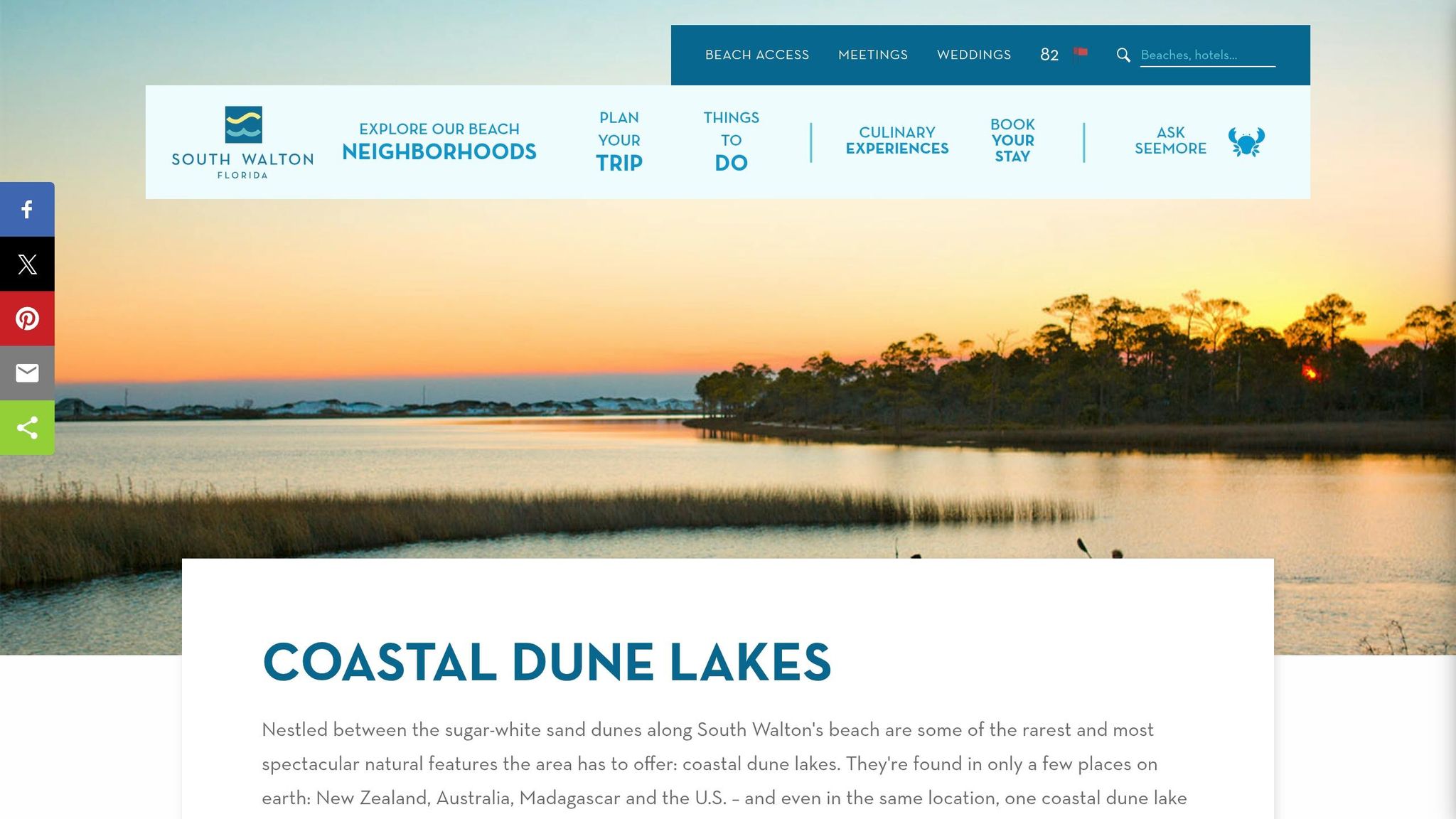
Eastern Lake is a shallow, 66-acre coastal dune lake with brackish water just off Scenic Highway 30A near Santa Rosa Beach.
This is one of the easier stops in the area. It’s smaller than the bay, the water is shallow, and getting to the shoreline is pretty simple.
Calm or protected water
The lake’s broad, shallow basin usually stays calm, which makes it easy to fish from shore. When the outfall channel is closed, Eastern Lake fishes more like a protected pond. And when it does open to the Gulf, the water inside the lake still stays calmer than the beach side.
Simple public access
The main public entry points are the South Gulf Drive beach access and the county park at Lakewood Drive and Lakeview Drive. That park also has parking and a boat launch.
Casting room for beginners
One thing that makes Eastern Lake beginner-friendly is space. The open sand and shallow edges give you room for overhead casts, sidearm casts, and easy back casts.
On the lake side, the shallow margins let you wade with care or stay on the bank and work on basic loops without fighting trees or docks. That takes a lot of stress out of practice, especially if you’re still getting the feel for timing and line control.
Common beginner-friendly target species
Eastern Lake’s brackish water holds both freshwater and saltwater species, including bass, sunfish, redfish, flounder, and other estuarine fish. A lot of these fish move along the shallow edges, which makes them a good fit for simple streamers and small baitfish patterns.
A few fly choices cover most situations here:
- Simple Clouser minnows
- Small shrimp patterns
- Sand flea-style flies
Those patterns handle most of what beginners are likely to run into at Eastern Lake. When the lake opens to the Gulf, the outflow also gives new anglers an easy shift from lake fishing to light surf fishing.
sbb-itb-d06eda6
4. Lake Powell at Camp Helen State Park
Lake Powell is the largest coastal dune lake on 30A, and Camp Helen State Park makes it an easy place for beginners to get started. You get protected shoreline access, brackish water, and long fishable bank sections. That means you can practice without dealing with surf, hard chop, or the kind of rough water that can make a first outing feel like too much.
Calm or protected water
Because Lake Powell is large and sheltered, the water is usually steadier than the open Gulf. That gives new anglers a more forgiving place to work on casting, line control, and reading the water.
The lake also opens to the Gulf from time to time, which changes both conditions and the mix of fish you may find. So even though it feels beginner-friendly, it also gives you a hands-on look at how brackish dune lakes shift over time.
Simple public access
Camp Helen State Park is open year-round from 8:00 a.m. to sunset. Access is low-cost, and shoreline entry is simple, which helps if you just want to park, walk in, and start fishing.
Entry costs:
- $4 per vehicle
- $2 per pedestrian or bicyclist
Casting room for beginners
Some bank sections are open and away from trees or crowded fishing spots. That gives you room for short overhead casts and roll casts without feeling boxed in.
Common beginner-friendly target species
Common targets include redfish, speckled trout, mullet, bass, and seasonal flounder, sheepshead, black drum, pompano, snapper, and catfish.
For most first trips, a simple fly setup is enough. Baitfish, shrimp, or small crustacean patterns will cover a lot of what you need.
If you want the next step up in wind, waves, and moving water, the next spot shifts from sheltered lake shoreline to Gulf surf near the dune lake outflows.
5. Grayton and Seagrove Surf Access Near Dune Lake Outflows
If you want a step up from the bay and coastal dune lakes, this is the easiest beginner surf option on 30A. It’s also the only open-surf spot on this list. When Western Lake or Eastern Lake breaches, the outflow forms a current seam that pushes bait into the Gulf and gives new anglers a simple setup to fish.
The best time to fish it is when the surf is small and the outflow is active.
Simple public access
Grayton Beach State Park and the county access at Hotz Avenue put you close to Western Lake and the surf. In Seagrove, South Gulf Drive and Eastern Lake Road offer parking and a short walk to the beach. Get there early because parking fills fast.
Casting room for beginners
This spot gives beginners a bit more space to work with. Fish ankle- to knee-deep water and cast parallel to shore. Keep your sessions short, and look for light-wind windows. That usually makes the whole thing feel a lot more forgiving.
Common beginner-friendly target species
Whiting and pompano are the easiest fish to target here. When the outflow is moving, trout and redfish may sit just outside the plume and feed on bait getting swept out by the flow.
A 7- or 8-weight rod with a floating or intermediate line, a 9-foot leader, and 12- to 15-lb tippet covers most trips. Use small shrimp or sand flea flies for whiting and pompano. For trout and redfish, stick with simple white baitfish patterns. Fish the edges of the outflow, not the hardest-running current.
Access and Fishing Style Comparison by Spot
Use this comparison to line up each spot with the easiest access style for your first trip. If you want the fast version, this is the simplest way to pick the right 30A spot based on how you plan to fish.
Choctawhatchee Bay is the easiest short-trip pick for shoreline or dock casting. The dune lakes are a bit more mixed, and each one feels different once you get there. Western Lake has the most organized park setup for paddleboarding and fishing. Eastern Lake shares public access with paddlers and swimmers, so space can get tight. Lake Powell is a good fit for beginners who don't mind a more active outing and feel at ease paddling before they check water conditions.
| Spot | Best Access Style | Easiest Skill Level | Likely Species | Main Caution |
|---|---|---|---|---|
| Choctawhatchee Bay (Santa Rosa Beach) | Shoreline and dock casting | True beginner | Speckled trout, redfish | Wind and boat traffic |
| Western Lake (Grayton Beach SP) | Shore wading near park access | True beginner | Redfish, trout, panfish | Park rules and outflow currents |
| Eastern Lake (public access) | Short shore sessions at public access | Beginner with basic casting control | Redfish, trout, panfish | Limited space; shared with paddlers and swimmers |
| Lake Powell (Camp Helen SP) | Protected paddle along lake margins | Beginner comfortable paddling | Inshore and brackish species | Changing outflow conditions; monitor currents and park guidance |
| Grayton/Seagrove surf (near outflows) | Wading in shallow surf edges | Intermediate beginner | Whiting, pompano, redfish, trout | Waves, shifting sandbars, stronger currents |
If you only have a short morning and want the easiest first outing, Western Lake or a Choctawhatchee Bay dock are your best bets. They take less setup, and there's less to figure out on the fly.
Lake Powell and the surf edges are better once you feel good about paddling or reading changing water conditions.
Once you pick a spot, the beginner tips below cover timing, access rules, and simple tackle choices.
Beginner Tips for Fishing 30A Waters
These tips make the five spots above easier to fish, especially if you're still getting comfortable with casting, reading water, and moving around unfamiliar access points.
Go Early or Late for Better Conditions
Fish from sunrise through mid-morning or from late afternoon to sunset. Those time windows usually bring cooler air, lower summer heat, lighter wind, and softer light, which makes casting and line control a lot easier. On more sheltered water, they can also match up with stronger feeding activity.
Check Access Rules Before You Go
Before heading out, check park hours, parking rules, swimming-only zones, and any short-term closures. If you're fishing Camp Helen or Lake Powell, confirm trailhead access, shoreline limits, and posted parking rules too.
Then check sowal.co for recent park updates, beach conditions, and notices.
And don't stop there. Water conditions can shift since your last visit, sometimes fast.
Watch Dune Lake Openings and Surf Changes
Western Lake, Eastern Lake, and Lake Powell can open to the Gulf through natural outflow channels. When that happens, depth, clarity, and current can change in a hurry. That can move fish around and change the way your fly drifts through the water. Surf edges near those outflows tend to fish best on calm days, because wind and waves can make things messy fast.
A simple setup helps a lot when the water is changing like that.
Keep Tackle Simple and Expectations Realistic
Start with a 7- or 8-weight rod, a floating line, and a 9-foot leader. Bring a small selection of proven flies instead of a giant box:
- White/chartreuse or olive Clouser Minnows
- Shrimp or crustacean flies in sizes #2–#6
Stay at one spot for the full session rather than bouncing around too much. Results can vary, so put your energy into better casts, cleaner line control, and safe fish handling.
Confirm Florida License Requirements
Florida has separate freshwater and saltwater licenses, and the one you need depends on the water you're fishing. Choctawhatchee Bay and the Gulf surf usually call for a saltwater license. Brackish dune lakes may fall under freshwater or saltwater rules, so check each location with FWC before you go. Florida residents can fish saltwater from shore without buying a license if they have the state Shoreline Fishing License. Non-residents age 16 and up need a license.
Conclusion
Beginner fly fishing on 30A usually goes best in protected water, like Choctawhatchee Bay and the dune lakes. Gulf surf is better saved for calm days with low swell. Put simply, the pattern stays the same: calmer water, easier access, and first-fish goals that feel within reach.
For your first trip, pick one easy shore-access spot and keep it simple. As you get more comfortable, branch out to Lake Powell or bay shoreline fishing. Start where you feel at ease, then work your way into more open water later.
Keep your attention on clean casts, accurate presentation, and one clear goal for the day. A short, focused outing will usually teach you more than a long trip where you're trying to do too much at once.
Before heading out, do one last check on access and water conditions. Check sowal.co for current access notes, park rules, parking, and local conditions before you go.
FAQs
Which 30A spot is best for my first fly fishing trip?
For your first fly fishing trip on 30A, a guided inshore charter is the smartest pick if you're just getting started. It takes a lot of the pressure off. Your guide can show you how to cast, explain how to read the water, and set you up with the gear, tackle, and bait you’ll need.
Plenty of charters in Santa Rosa Beach and Choctawhatchee Bay also run beginner- and kid-friendly trips. These trips usually stay close to the coastline, which makes the whole experience feel more relaxed, safe, and easy to learn from.
Do I need a freshwater or saltwater fishing license on 30A?
Often, yes.
On 30A, anglers may need both freshwater and saltwater licenses. That’s because the coastal dune lakes have brackish water, and those conditions can swing one way or the other.
There’s also a common exception people miss. If you’re fishing from a licensed charter boat or a public pier, you’re usually covered under that license.
Some anglers are exempt, too:
- Children under 16
- Florida residents age 65 or older, with valid proof
When should I choose a dune lake over the surf?
Choose a coastal dune lake instead of the Gulf surf if you want calm, shallow water and a more laid-back setting. For beginners, that can make a big difference. Waves can feel like a lot at first, while a dune lake gives you more room to settle in and get comfortable.
Dune lakes also give you a protected, non-motorized place to fish. One thing to watch: make sure you have the right freshwater or saltwater fishing license based on the lake’s current conditions.