
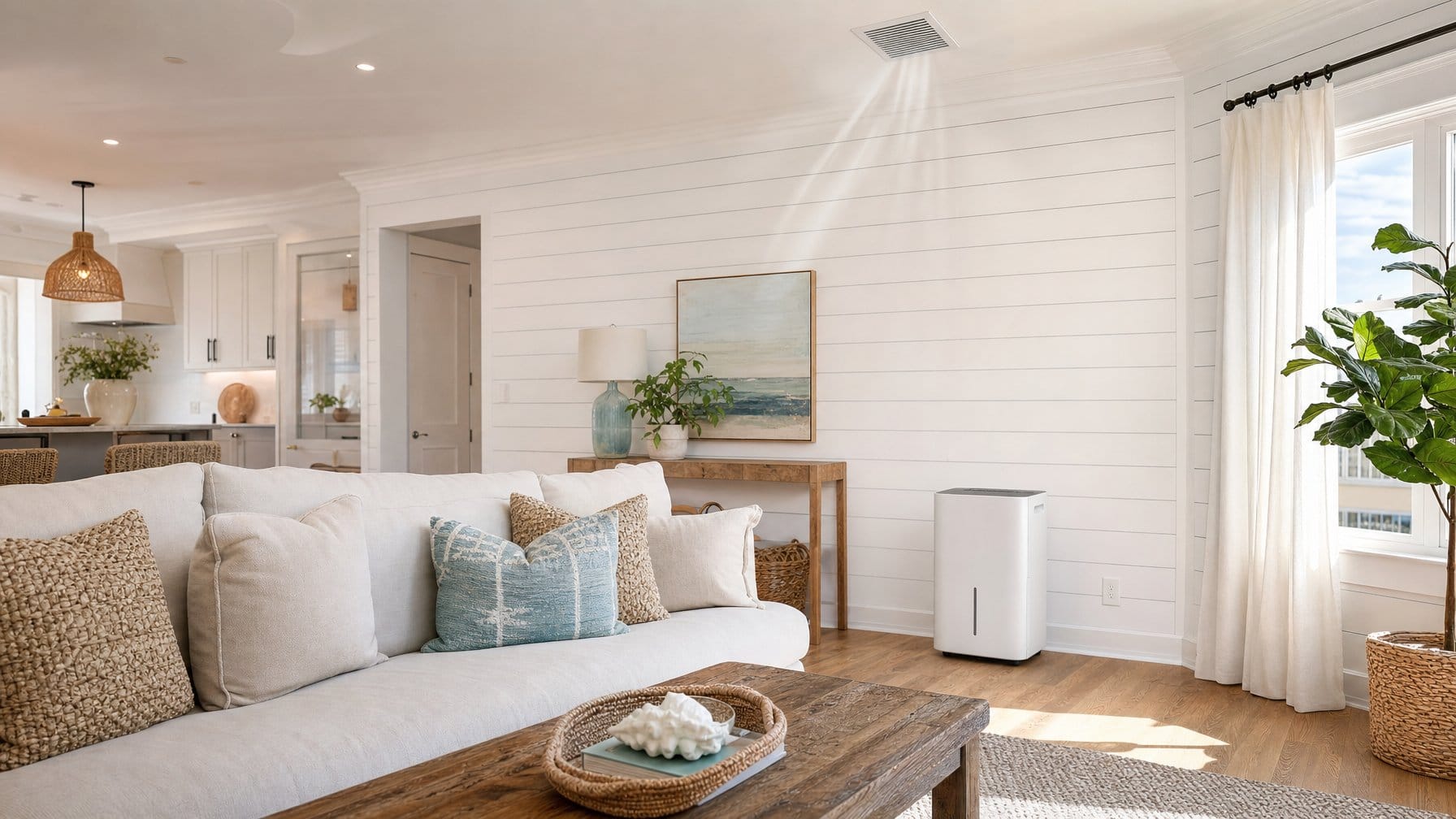
A South Walton rental can read 74°F on the thermostat and still feel clammy at midnight, because the number on the wall says nothing about how much water is hanging in the air. Summer outdoor relative humidity along the Gulf Coast routinely sits in the 70–90% range, and that moisture load walks through every open door, sliding glass panel, and beach-towel-laden laundry room from Inlet Beach to Dune Allen Beach.
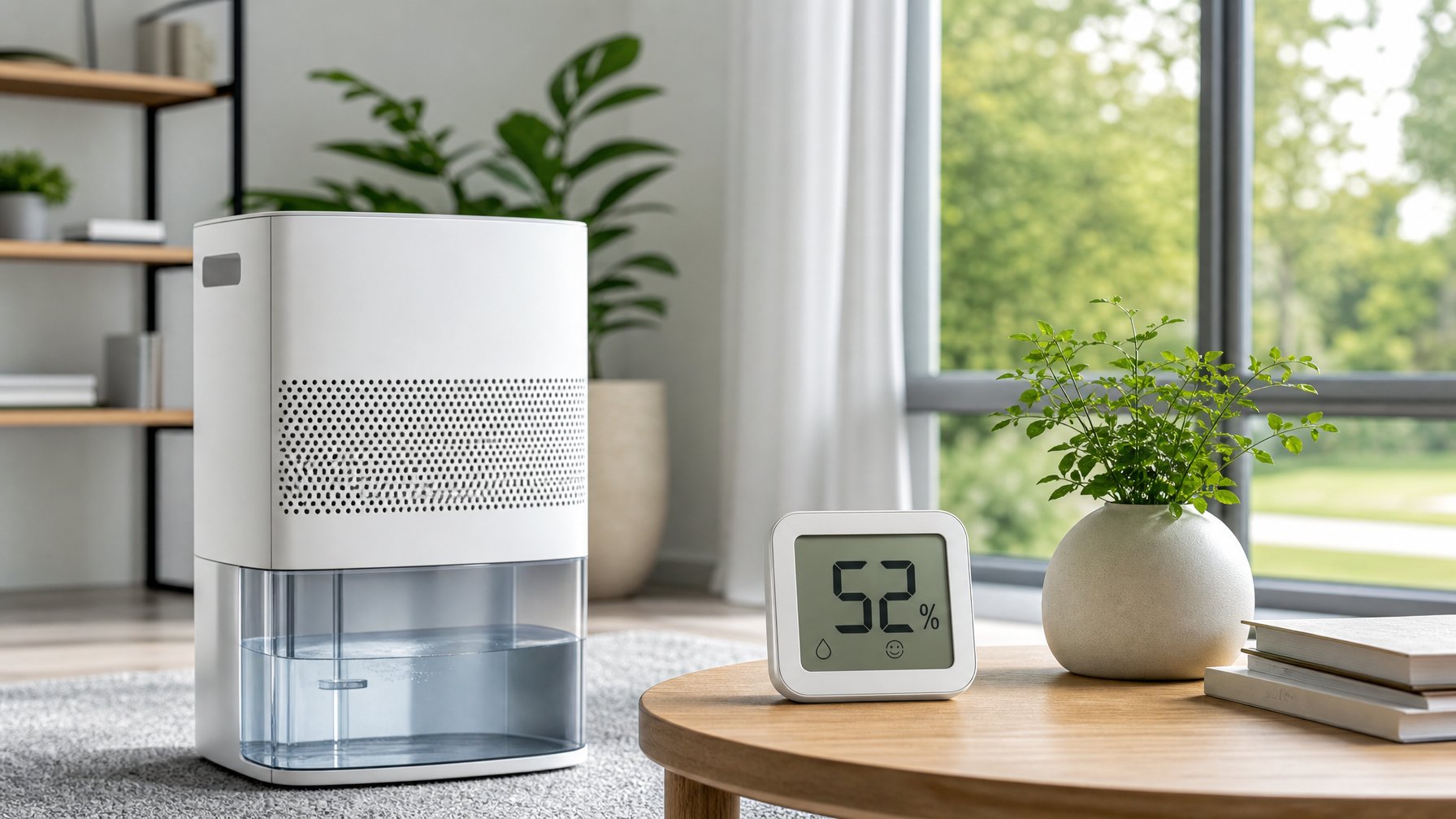
Effective 30A humidity control comes down to holding indoor relative humidity near 40–50%, which means letting a correctly sized air conditioner run long enough to wring water out of the air and adding a portable dehumidifier wherever a room stays clammy anyway. The Environmental Protection Agency recommends keeping indoor RH between 30% and 50%, and coastal homes in Walton County drift above that line fast when the thermostat is set warm overnight or windows stay open on muggy evenings.
Guests blame the AC. Owners blame the guests. The measurable cause is almost always a moisture load that outpaces the run time of the cooling system, and it is fixable with a hygrometer, a few thermostat habits, and some attention to condensate drains.
Key Takeaways
- Gulf and bay-side moisture pushes indoor RH past comfortable levels even when the temperature reads fine.
- A 40–50% indoor relative humidity target protects linens, wood, and guest reviews, and a $10–$15 hygrometer confirms where a home sits.
- Long AC run cycles on AUTO plus targeted dehumidification beat opening windows on a high dew point night.
Why South Walton Rentals Can Feel Damp Even With the AC On
South Walton homes feel damp with the AC running because cooling and drying are two different jobs, and the local climate loads the air with more water than a short cooling cycle can remove. A mid-80s afternoon at 80% outdoor RH carries far more moisture than a 95-degree inland day at 35%, which is why guests describe 30A summers as heavy instead of hot.
How Gulf Moisture, High Dew Points, and Open Windows Add Indoor Moisture
Warm air holds more water. When an air conditioner cools that air across the evaporator coil, the moisture condenses and drains away, but only while the compressor is running.
Set a thermostat at 78°F in a shaded cottage in Seagrove or WaterColor and the system satisfies temperature quickly, shuts off, and leaves the water behind. That pattern, described in HVAC literature as a system that satisfies a dry bulb setpoint before it removes enough moisture, is the single most common cause of a sticky rental.
Open windows compound it. A breezy evening in Grayton Beach or Blue Mountain Beach feels pleasant on the porch while dumping humid outside air into a house that then has to be re-dried from scratch.
Interior sources stack on top: showers for six people, a dishwasher, boiling pasta, and a pile of Gulf-soaked towels in a hall closet.
Why Bay-Side, Inland, and Long-Vacant Homes Need Extra Attention
Homes a few blocks off CR 30A, along the Eastern Lake and Point Washington corridors, or backing up to Choctawhatchee Bay usually feel damper than Gulf-front units. Tree cover and less direct cross-breeze mean slower drying and shadier, cooler surfaces where condensation forms.
Vacancy makes it worse. A cottage closed up for three weeks between bookings, with the thermostat set at 82°F to save on power, traps moisture in closets, under beds, and inside the HVAC closet where nobody looks until the musty smell arrives with the next guest.
What Indoor Relative Humidity Should a 30A Home Maintain?
A South Walton home should hold indoor relative humidity between 40% and 50% during the cooling season. That band keeps linens dry, cuts mold and dust-mite risk, and stays achievable for a properly sized system in a Florida coastal climate.
Below is what that target looks like in practice, and how to verify it in the rooms that matter.
Why 40–50% RH Is a Practical Comfort and Mold-Reduction Target
The 30–50% range is the standard recommendation for residential indoor air, with sustained readings above 50% encouraging dust mites, mold spores, and bacteria, plus warping in wood floors. Anything past 60% indoors starts to feel sticky and supports active mildew growth.
Chasing 35% in August on 30A is unrealistic and expensive. Holding 45% is achievable, and it is the difference between crisp sheets and that slightly cool, slightly damp feel on a duvet cover.
| Indoor RH | What it feels like | Risk level |
|---|---|---|
| 35–45% | Dry, crisp linens | Low |
| 45–50% | Comfortable, target band | Low |
| 55–60% | Air feels heavy | Elevated |
| 65%+ | Damp towels never dry, musty odor | Mold and mildew likely |
Signs That Humidity Is Too High in Bedrooms, Closets, and HVAC Areas
Watch for these before a hygrometer ever comes out:
- Sheets and pillowcases that feel cool and slightly damp at bedtime
- A musty note when a hall closet or HVAC closet door opens
- Condensation on supply registers or on the toilet tank
- Beach towels still wet on the rail 24 hours later
- Cabinet doors and interior doors sticking in their frames
- Salt clumping in shakers, cereal going soft overnight
How to Measure RH With a Humidity Sensor
A digital hygrometer runs about $10 to $15 and settles the argument in a day. Place one in the room that feels worst, usually a bedroom on an exterior wall or a bunk room over a garage, and read it morning and evening.
Two or three sensors spread through a rental show where the problem lives. A smart thermostat with an onboard humidity sensor gives a whole-house average, which is useful for trending, though it will miss a single clammy closet.
Which Equipment Actually Removes Moisture?
Central air conditioning does the bulk of the moisture removal in a 30A home, a portable dehumidifier handles rooms the AC cannot reach, and moisture absorbers manage small enclosed spaces. Specialty humidity controllers belong to a narrower set of installations.
The differences show up in how much water each one pulls per day and how much attention it needs between guest stays.
How Central AC Dehumidifies and Why Fan Settings Matter
The evaporator coil condenses water out of the return air, and that water drains away only while the compressor runs. Longer, slower cycles remove more moisture than short bursts.
Set the fan to AUTO. With the fan on continuous ON, air keeps blowing across a wet coil after the compressor stops, which re-evaporates the condensate and pushes that moisture straight back into the house.
Variable-speed and two-stage equipment runs longer at lower capacity and dehumidifies better than a single-stage unit chasing the same setpoint. Oversized systems are a known offender in coastal rentals: they cool the space in eight minutes, shut off, and never dry anything.
When a Portable Dehumidifier Is the Better Supplement
A portable unit earns its spot in a bunk room, a bonus room over the garage, a ground-floor bedroom, or any space that stays clammy while the rest of the house reads 45%. A decent portable pulls several gallons a day.
Run a hose to a nearby sink or shower drain for continuous drainage whenever the layout allows. Bucket-emptying is a task guests will not do, and a full bucket means the unit sits idle for the rest of the week.
What Moisture Absorbers Can and Cannot Do
Calcium chloride tubs and desiccant packs work in sealed, still spaces: linen closets, hall cabinets, under-sink areas, gear lockers, and drawers holding board games or spare bedding. They cost a few dollars each and need replacing when the crystals dissolve.
They will not dry a bedroom. Passive absorbers have no fan and no meaningful capacity against an open room with a 500 CFM return pulling humid air through it.
When a ZL-7830B Humidity Controller May Be Relevant for Specialty Installations
The ZL-7830A and ZL-7830B are industrial-style humidity controllers, described by the manufacturer as humidity controllers with a 30A output relay housed behind an IP65-rated front panel. The published specs list 50/60Hz operation, an R1 load of 30A/250VAC, and R2/R3 loads of 3A/250VAC, all rated for resistive load.
That capability suits incubators, curing rooms, greenhouses, mushroom operations, and workshop or storage buildings where a dehumidifier or humidifier needs switching on a setpoint. A ZL-7830B humidity controller has no place wired into a residential HVAC system on 30A; that work belongs to a licensed HVAC contractor using equipment-matched controls.
Verify any specialty wiring and current rating against the equipment being switched, and confirm the installation with a licensed electrician.
What Should Guests Do When a Rental Feels Sticky?
Guests can fix most sticky-rental complaints in about ten minutes: drop the thermostat a few degrees, confirm the fan is on AUTO, close the windows, and get the wet textiles out of the house. The steps below cover what to do first and when the problem needs the property manager.
Adjust the Thermostat and Set the HVAC Fan to AUTO
Lower the setpoint 2 to 4 degrees from wherever the arriving group found it. A longer run cycle removes more water, and a house at 45% RH feels comfortable at a warmer temperature than the same house at 60%.
Check the fan switch on the thermostat. If it reads ON, move it to AUTO unless the property manager states the system is designed for continuous fan operation.
Keep interior doors open so conditioned air circulates into bedrooms and baths instead of pooling in the living area.
Handle Wet Towels, Swimsuits, Bathrooms, and Laundry Without Feeding Mildew
Wet beach towels and swimsuits belong outside on a porch rail or an outdoor line, never in a hamper or a closet. Mildew can establish on damp fabric in a matter of hours in a Florida summer.
Run the bathroom exhaust fan during every shower and leave it on for 20 minutes afterward. Crack the bathroom door once the shower ends so the moisture has somewhere to go.
Skip the indoor drying rack. A load of towels air-drying in a guest bedroom adds pounds of water to the air the AC has to remove.
When to Contact the Rental Manager Instead of Opening Windows
Call the property manager when the thermostat has been low for several hours and the air still feels heavy, when a hygrometer reads above 60%, when registers are sweating, or when any room smells musty. Those point to a mechanical issue: a clogged condensate drain, a dirty filter, a refrigerant problem, or a coil that needs service.
Opening the windows on a high dew point night in Rosemary Beach or Alys Beach feels like relief for twenty minutes and leaves the house wetter by morning. Ask for a portable dehumidifier instead; most 30A management companies keep a few on hand during peak season.
How Can Owners and Property Managers Prevent Moisture Problems?
Owners prevent moisture complaints with maintenance scheduling, a vacancy thermostat strategy, and targeted dehumidification in the rooms that historically stay damp. Lead time matters here: equipment orders, HVAC service calls, and dehumidifier stock all tighten between March and June, so the work belongs on the calendar before spring break traffic arrives.
Check Filters, Condensate Drains, and Musty HVAC Closets
Replace air filters every 1 to 3 months, and monthly during peak occupancy in a rental with heavy turnover. A clogged filter restricts airflow, cuts capacity, and reduces the system's ability to pull moisture out of the return air.
Flush the condensate line and check the drain pan on a set schedule. A slow drain backs water into the pan, the pan overflows or the float switch trips, and the system either soaks the closet or shuts down mid-stay.
Open the HVAC closet and smell it. A musty closet with damp insulation or visible mildew on the air handler cabinet is a service call, not a deodorizer problem.
Set a Vacancy Temperature That Lets the System Run
Set vacant homes at 76 to 78°F. Pushing an empty cottage to 82°F saves a little on the power bill and lets indoor RH climb into the 60s and 70s for weeks at a time.
Better setups pair a smart thermostat with a humidity setpoint that triggers cooling when RH crosses a threshold, which handles the mild, rainy stretches when the temperature never gets high enough to call for AC. Point Washington and Eastern Lake corridor homes benefit most from this, since they lack the drying cross-breeze of Gulf-front units.
Use Dehumidification Support in Problem Rooms and Closed Cabinets
Track which rooms generate complaints across a season. Bunk rooms, ground-floor bedrooms, and bonus rooms over garages are the usual suspects.
Place a portable dehumidifier with continuous drain in those spaces and stock moisture absorbers in linen closets, under-sink cabinets, and storage lockers before peak season. Whole-house dehumidifiers with auto-drain and smart controls remove the between-stay maintenance burden entirely, which is the argument for them in an investment property.
Questions to Ask Before Buying a Controller or Specialty Humidity Equipment
Before ordering anything, confirm with a licensed HVAC technician or the property manager:
- Is the existing AC correctly sized, or is it oversized and short-cycling?
- Does the current thermostat support a humidity setpoint?
- Where would a whole-house dehumidifier tie into the ductwork, and is there a condensate path?
- What is the electrical load, and does the panel have capacity?
- Is the space conditioned or unconditioned, since that changes equipment selection entirely?
- What is the delivery and installation lead time relative to the booking calendar?
Verify current equipment specs, pricing, and installation requirements with the property manager and a licensed contractor before committing.
A Drier Indoor Plan Protects Comfort and the Home
Holding a 30A home between 40% and 50% relative humidity handles the sticky-sheets complaints, the musty closet smell, and most of the mold risk that comes with a Walton County summer. The tools are ordinary: a working air conditioner that runs long cycles with the fan on AUTO, a $10 hygrometer confirming the number, and a portable dehumidifier in the room that stays clammy.
Guests get results from a lower setpoint, closed windows on high dew point nights, and wet towels moved outside. Owners get results from clean filters, clear condensate drains, a vacancy setpoint around 76 to 78°F, and moisture absorbers placed in closed cabinets before the season starts.
For anything mechanical, a sweating register, a slow drain, a coil that will not keep up, book a licensed HVAC technician and confirm the equipment specs before ordering replacements.
Frequently Asked Questions
Is 70% indoor humidity too high for a South Walton rental?
Yes, 70% indoor RH is well above the safe range and needs immediate attention. Sustained readings above 60% support mold, mildew, and dust mites, and 70% means the cooling system is losing ground against the moisture load.
Check the filter and condensate drain, lower the thermostat, and add dehumidification.
What humidity level should I set for a vacant Florida vacation home?
Target 50% RH or below with the thermostat at 76 to 78°F while the home sits empty. A smart thermostat with a humidity setpoint will call for cooling on mild, rainy days when the temperature alone would never trigger the system.
Vacancy settings above 80°F let closets and bedding absorb weeks of moisture.
Should I leave the AC fan on AUTO or ON to reduce humidity?
Use AUTO. With the fan set to ON, air continues blowing across a wet evaporator coil after the compressor stops, re-evaporating condensate that would otherwise drain away and pushing that moisture back into the house.
Continuous fan operation only works on systems specifically designed for it.
Will a portable dehumidifier help if the air conditioner is running?
Yes, in rooms the AC struggles to dry. A portable unit removes several gallons of water per day and targets bunk rooms, ground-floor bedrooms, and bonus spaces that read higher than the rest of the house.
Run a hose to a drain so nobody has to empty a bucket mid-stay.
Why do closets and linens feel damp after a rainy week on 30A?
Closed closets have little air exchange, so moisture that enters during a humid stretch stays there. Rainy weeks keep outdoor RH high while cooler temperatures reduce AC run time, which cuts dehumidification.
Leave closet doors ajar, run the system longer, and place moisture absorbers on shelves.
Can a thermostat control humidity as well as temperature?
Many smart thermostats include a built-in humidity sensor and a humidity setpoint that can trigger cooling or signal a connected dehumidifier. Basic thermostats read temperature only.
Check the model's specifications or ask the property manager whether the installed unit supports humidity control.